Ciao! I’m Giulia, and I’ve been teaching Italian for years. One question my students always ask is: “Giulia, why does Italian have so many words that don’t sound… Italian?”
It’s a great observation. You’ll be learning along, feeling confident with parole like casa and amore, and then suddenly bungee jumping or computer appears. It feels like a different language crashed the party.
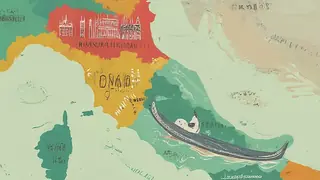
Here’s the truth: Italian is a magnificent sponge. Over centuries, it has absorbed words from every culture that touched this boot-shaped peninsula. And honestly? That’s what makes it so rich. Let me show you what I mean.
The Foundation: From Latin to Italian
Every Italian lesson starts with Latin. I know, I know, it sounds academic. But here’s the thing: you already know more Latin than you think. When I teach vocabulary, I love pointing out connections. Acqua (water) comes from Latin aqua. Notte (night) from nox, noctis. Italian is essentially Latin that evolved naturally, spoken by everyday people rather than scholars.
During the Barbarian Invasions (5th–6th centuries), Germanic tribes left their mark too. Words like guerra (war), roba (stuff), and bianco (white) have Germanic roots. My students are always surprised that guerra isn’t purely Latin; but that’s Italy for you: a crossroads of civilizations.
Greek and Arabic: The Unexpected Contributors
One of my favorite things to point out in class is how much we owe to Greek. Words like filosofia (philosophy), matematica (mathematics), and democrazia (democracy) are direct gifts from ancient Greek. When a student struggles with filosofia, I tell them: “Don’t worry, the Greeks had a hand in this one too.”
But Arabic? That one really gets people. During Arab rule over Sicily and Southern Italy, words poured in that we use every single day:
Italiano: Oggi ho comprato dello zucchero e dei limoni al mercato. English: Today I bought some sugar and lemons at the market.
That zucchero (sugar) and limone (lemon)? Arabic. Algebra, caffè, magazzino (warehouse)? Also Arabic. Every time I sip my morning espresso, I’m reminded of this beautiful cultural layering.
French: The Language of Elegance
During the Renaissance, French was the language of diplomacy and nobility across Europe. Italian rulers and aristocrats wanted to sound sophisticated, so they peppered their speech with French terms.
I see this in my students all the time, especially the ones who also study fashion or cooking. They light up when I tell them that abito (dress), moda (fashion), and cucina (kitchen) carry French echoes. When you say menu or chef in Italy, you’re speaking a little French without even realizing it.
Italiano: Quel ristorante ha un menu raffinato e uno chef famoso. English: That restaurant has a refined menu and a famous chef.
Spanish: The Close Cousin
Spanish occupation of parts of Italy left a noticeable imprint. Words like plaza (square), fiesta (party), and pantaloni (trousers) slipped naturally into Italian. The languages are so close that I often catch my Spanish-speaking students mixing them up, and honestly, I don’t blame them.
The warmth between Italian and Spanish isn’t just cultural. It’s linguistic. We share rhythms, structures, and an entire emotional register. When a Spanish speaker tries Italian, they’re already halfway there.
English: The Modern Wave
Now here’s where things get personal. I use English words every single day without thinking: computer, internet, smartphone, weekend, marketing. My students, especially the younger ones, don’t even realize these aren’t originally Italian.
Italiano: Questo weekend ho lavorato al computer per finire il progetto di marketing. English: This weekend I worked on the computer to finish the marketing project.
Some Italians worry about English taking over. I understand the concern, but I see it differently. Language has always borrowed and adapted. Italian isn’t losing itself; it’s just adding new colors to its palette.
What This Means for You as a Learner
Here’s the practical takeaway: when you learn Italian, you’re not just learning one language. You’re tracing the history of Europe, one word at a time. That word you’re struggling to remember? It might have friends in Greek, Arabic, or French that make it easier to recognize.
The next time you come across a word that seems out of place, don’t get frustrated. Get curious. Ask yourself: where did this word travel from before it got here? That’s the joy of Italian: every word has a story.
Want to Learn the Stories Behind the Words?
I bring history and culture into every lesson. Understanding where Italian comes from makes it easier, and way more fun, to learn. Try a lesson with me and see the difference.