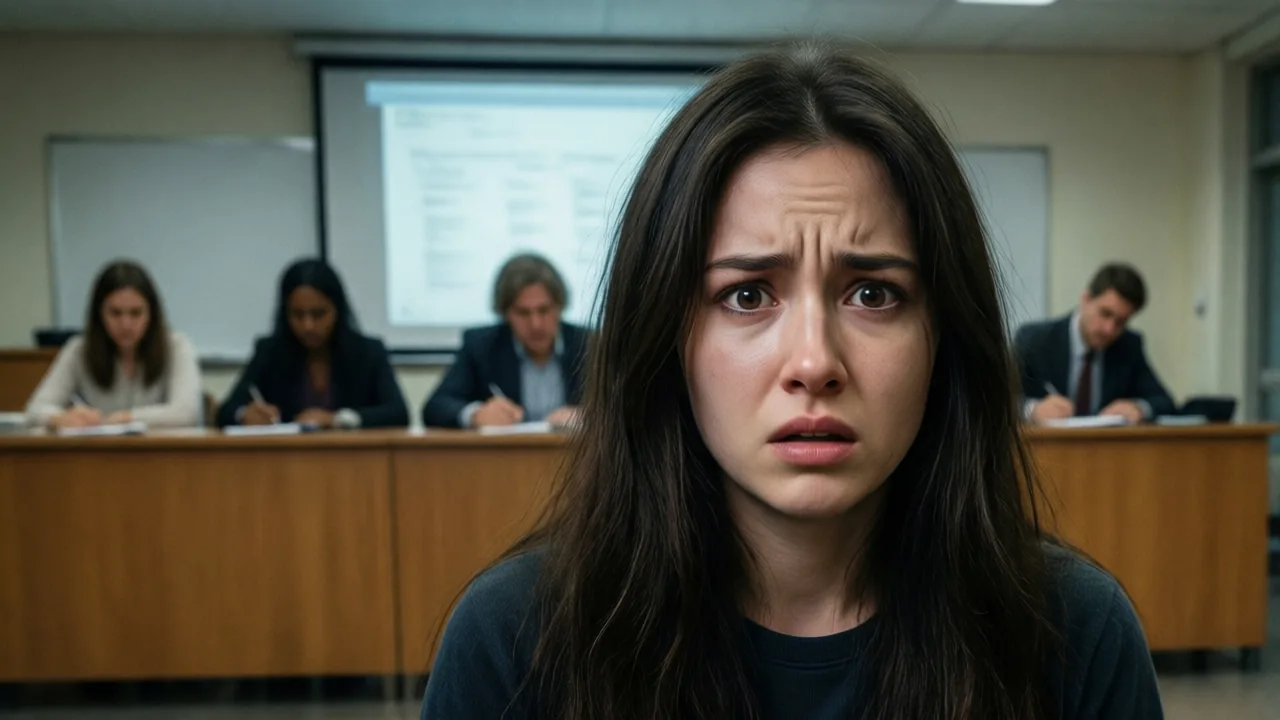
Most candidates who fail the Italian oral exam do not fail because their Italian is bad; they fail because of how they perform under pressure. Freezing, mumbling, answering in single words, or reciting a memorised speech are what actually lose marks.
Here are the most common mistakes, and how to avoid each one.
The Mistakes That Actually Fail Candidates
- Freezing and going silent. The examiner cannot assess what you do not say. A moment of silence feels longer to you than to them, and knowing that helps you push through it.
- Speaking too quietly or too fast. Nervous candidates rush or whisper. Slow, clear, loud speech scores far better than fast, mumbled speech.
- One-word answers. “Sì” and “no” give the examiner nothing. Extend every answer: one sentence, then a reason, then an example.
- Going off topic. Memorised speeches collapse the moment the examiner changes direction. Listen to the actual question.
- Pronunciation errors. Mispronouncing gli, gn, or vowels shifts marks, even with perfect grammar.
- Ignoring interaction. The oral is a conversation. Nodding, asking “Può ripetere?” (can you repeat?), and reacting naturally are part of the test.
What the Examiner Is Actually Scoring
The oral exam is marked on five rough axes:
| Criterion | What it really means |
|---|---|
| Fluency | Do you keep talking without long stalls? |
| Pronunciation | Can you be understood easily? |
| Accuracy | Are basic grammar and verb forms correct? |
| Vocabulary | Can you say what you mean with range? |
| Interaction | Do you respond appropriately and keep it natural? |
Notice there is no “memorisation” category; producing your own language is the whole point.
How to Practise So You Pass
- Speak out loud daily. Ten minutes a day prevents the “mouth doesn’t work” effect on exam day.
- Record yourself. Answer a past-paper prompt, listen back, and fix the worst ten seconds.
- Use adaptable phrases. Learn “Secondo me…” (in my opinion), “Per esempio…” (for example), “Inoltre…” (furthermore), connectors you can drop into any topic.
- Do a mock interview. A timed rehearsal with feedback is the single best preparation. This is exactly what my exam preparation lessons focus on.
What to Do If You Freeze
Build a recovery script into your training:
- “Mi scusi, può ripetere?” (can you repeat?)
- “Un momento, per favore…” (give yourself three seconds)
- “Dunque…” (a natural filler that buys time while you think)
Examiners know candidates get nervous. Recovering gracefully is a skill they reward; it is realistic, everyday communication.
Frequently Asked Questions
Why do people fail the Italian speaking exam?
Freezing, rushing, mumbling, one-word answers, going off topic, and weak pronunciation.
What is the examiner looking for?
Fluency, pronunciation, accuracy, vocabulary range, and interaction: independent production, not memorised speeches.
How can I practise?
Record yourself, speak aloud daily, learn adaptable phrases, and do timed mock interviews.
Should I memorise answers?
No. Examiners detect memorised scripts and change topic to test you. Learn reusable structures instead.
Want real feedback on your spoken Italian before the exam?
Explore my Italian exam preparation guide or message me on WhatsApp for a mock oral session and honest feedback.
Explore exam preparation or chat with me on WhatsApp.
In bocca al lupo, and good luck with your exam! 🇮🇹