Ciao! I’m Giulia, your Italian teacher. When people ask me how to really get under the skin of Italy, past the pasta and the monuments, my answer is always the same: watch our films. Italian cinema has a way of showing you real life, our history, our funny habits, all of it, with a raw honesty and a beauty you will not find anywhere else.
We have made movies that honestly changed the way the whole world thinks about film. After the war, the directors of Neorealism simply grabbed their cameras and went out into the streets to film real life. Then came dreamers like Fellini, who could build whole worlds up on the screen. Our film history is packed with passion, big ideas, and images that stay with you long after the credits roll.
So here is my gift to you: a list of 10 Italian films that I genuinely treasure. These are not random picks. These are stories that help you understand Italy, our past, our present, the way we think, the way we love, and yes, even the way we argue.
For every film I share a short summary and, more importantly, the reason it earned a spot on my list. Sometimes a movie reveals a side of Italian culture you have never seen. Sometimes it simply captures a feeling so deeply Italian that you can almost taste it. And just for fun, I have picked one memorable sentence from each film, a little taste of its flavour. Ready for a trip to the cinema, Italian style? Andiamo! Let us go.
The short answer: If you want the best Italian films to understand Italy fast, start with La Dolce Vita, Cinema Paradiso, La Grande Bellezza, Bicycle Thieves, and Life is Beautiful. Then keep reading for the full list, with history, art, and the real face of modern Italy.
Feeling curious already? That is the right spirit. Keep scrolling, and at the end I will show you the easiest, lowest pressure way to turn your love for these films into real Italian conversation skills.

My Top 10 Italian Films at a Glance
Here is the whole list in one quick table, so you can find your way around easily.
| # | Film | Year | Director | Why it makes the list |
|---|---|---|---|---|
| 1 | La Dolce Vita | 1960 | Federico Fellini | The film that named the paparazzi and captured Rome’s glamorous emptiness |
| 2 | Cinema Paradiso | 1988 | Giuseppe Tornatore | A love letter to movies and to childhood |
| 3 | La Grande Bellezza | 2013 | Paolo Sorrentino | Modern Rome, beauty, and the search for meaning |
| 4 | 8½ | 1963 | Federico Fellini | The creative mind in chaos, pure film art |
| 5 | Bicycle Thieves | 1948 | Vittorio De Sica | The beating heart of Neorealism and postwar Rome |
| 6 | Rome Open City | 1945 | Roberto Rossellini | Resistance, courage, and the birth of a new Italy |
| 7 | The Leopard | 1963 | Luchino Visconti | The end of an era, all beauty and decay |
| 8 | Life is Beautiful | 1997 | Roberto Benigni | Love and imagination standing up to horror |
| 9 | The Conformist | 1970 | Bernardo Bertolucci | Fascism, fear, and why people conform |
| 10 | Gomorra | 2008 | Matteo Garrone | The raw reality of the Camorra today |
1. La Dolce Vita (1960), directed by Federico Fellini
Ah, Fellini. How could I not start here? La Dolce Vita is not just a film, it is a piece of Italian history. We follow Marcello, played by the unforgettable Marcello Mastroianni, a journalist drifting through Rome’s high society. Endless parties, celebrities, glamour, and underneath it all a strange, beautiful emptiness. He is searching for something real, maybe love, maybe meaning, but the glitz keeps pulling him under.
Why must you see it? For one thing, this film gave the world the word paparazzo, after the photographer Paparazzo in the story. But it is so much more than that. Fellini captured a very specific moment: Rome in the sixties. You feel the energy of the postwar boom, the hunger for more, and the quiet disillusionment underneath. It is a big, gorgeous, overwhelming film about fame, faith, and the hunt for happiness. That famous scene with Anita Ekberg in the Trevi Fountain feels like a dream, or maybe a beautiful nightmare. You do not just watch this film. You live it for a few hours. Critic Roger Ebert called it one of the greatest films he ever saw, and once you reach the end, you will understand exactly why.
Memorable sentence: “La più grande fregatura della vita? L’amore.” (Life’s biggest joke? Love.)
IMDb link: La Dolce Vita | Roger Ebert’s review: Great Movie, La Dolce Vita
2. Cinema Paradiso (1988), directed by Giuseppe Tornatore
Okay, maybe have some tissues ready for this one. Cinema Paradiso is pure emotion, and honestly it is a love letter to movies themselves. We see the story through the eyes of Salvatore, a successful filmmaker looking back on his childhood in a tiny Sicilian village right after World War II. He practically grew up in the local cinema, the Cinema Paradiso, where he became great friends with Alfredo, the projectionist. Alfredo teaches him about movies, about life, about love.
This film gets me every single time. It makes you feel so nostalgic, not just for old movies, but for childhood itself, for loves you have lost, for a time that felt simpler. Tornatore captures the magic of sitting in a dark room while stories flicker on the screen, and how movies can bring a whole community together. If you are learning Italian, it is also wonderful because it shows real village life, you hear different ways people talk, and you see how important the local piazza and gathering spots are. The heart of the film is the friendship between young Salvatore, called Totò, and Alfredo. It is funny, touching, and it ends up shaping Salvatore’s whole life. And the ending? I will not spoil it, but I honestly think it is one of the most moving endings ever filmed. It is all about the power of memories and how art can shape who we become.
Memorable sentence: “Qualunque cosa farai, amala, come amavi la cabina del Paradiso quando eri picciriddu.” (Whatever you end up doing, love it, the way you loved the projection booth of the Paradiso when you were a little boy.)
IMDb link: Cinema Paradiso
3. La Grande Bellezza (2013), directed by Paolo Sorrentino
People often call this one a modern La Dolce Vita. La Grande Bellezza takes us back to Rome, but this time through the eyes of Jep Gambardella, played by Toni Servillo, who is simply incredible here. Jep wrote one hit novel years ago and has basically spent his life since then drifting through Rome’s fancy parties and artsy crowds. He is witty, charming, a bit cynical, and as he turns 65 he starts looking back at his life, at a lost love, and at what it all means, surrounded by all this beauty that often feels a little fake.
The way Sorrentino shows Rome is just gorgeous in this film. But like Fellini, he is trying to peek underneath the shiny surface. It is a film about getting older, about regret and nostalgia, and about trying to find something real, something truly beautiful, in a world that can seem very superficial. I think it says a lot about a certain slice of Italian high society, but also about feelings everyone understands. It is visually so rich, almost too much sometimes, with scenes that really stay with you. It has a sad, melancholic feel, but also moments of razor sharp humor. For me it perfectly captures that unique mix of cynicism and deep down romanticism you often find in Rome. It keeps asking: what is the great beauty? Is it the city itself? Art? A memory? Or maybe just the search for it?
Memorable sentence: “Finisce sempre così. Con la morte. Prima, però, c’è stata la vita.” (It always ends like this. With death. But first, there was life.)
IMDb link: The Great Beauty
4. 8½ (1963), directed by Federico Fellini
Yes, another Fellini. You simply cannot talk about essential Italian movies without him, and 8½ might be his most personal film, one that influenced filmmakers everywhere. It stars Marcello Mastroianni again, this time as Guido Anselmi, a famous director who is completely stuck. He is supposed to be making a big science fiction movie, but he has zero ideas. So he escapes into his memories, his dreams, his fantasies, all while juggling his wife, his mistress, his producers, and the actors hanging around.
This film is basically about the messy, chaotic reality of trying to create something. It is surreal, funny, confusing at times, but totally fascinating. Fellini breaks down the walls between what is real, what is remembered, and what is imagined, in a way that felt brand new back then. Watching it feels like you are literally inside Guido’s head, or maybe Fellini’s own head. It is a movie about making movies, about the stress and anxiety of being an artist, but it is also about life, relationships, and trying to be honest with yourself. Why the name 8½? It was literally Fellini’s eighth and a half film, because he counted some short films and collaborations as halves. If you are interested in film as art, this is a must see. It is definitely complex, maybe not the easiest watch the first time, but it gives you so much to think about. It shows how personal problems and creating art are always tangled up together.
Memorable sentence: “Mi sembrava di avere le idee così chiare. Volevo fare un film onesto, senza bugie di nessun genere. Credevo di avere qualcosa di così semplice, così semplice da dire.” (I thought I had such clear ideas. I wanted to make an honest film, without lies of any kind. I thought I had something so simple, so simple to say.)
IMDb link: 8½
5. Bicycle Thieves (1948), directed by Vittorio De Sica
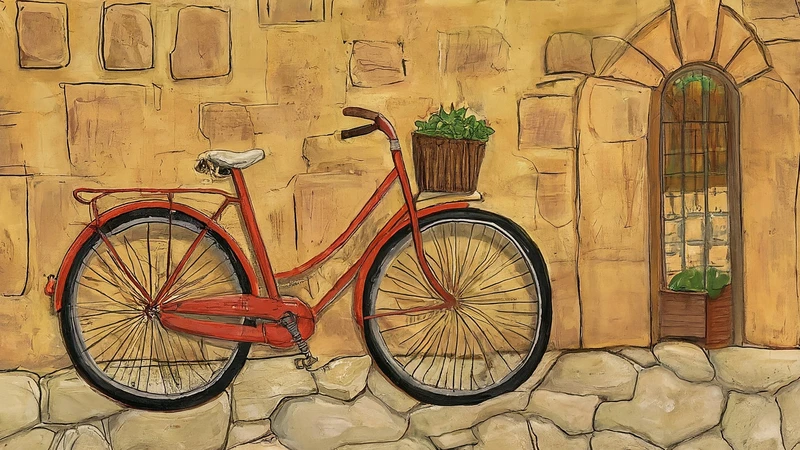
Now let us jump back in time, right into the heart of Italian Neorealism. Bicycle Thieves is probably one of the most famous and moving films from that whole movement. The story sounds simple, but it hits hard. Antonio Ricci is an unemployed man in Rome just after the war. He finally gets a job putting up posters, but he absolutely needs a bicycle for it. He had pawned his own bike, so his wife Maria pawns their bedsheets, a big deal back then, to get it back. Tragedy strikes on his very first day: the bicycle gets stolen. The rest of the movie follows Antonio and his little boy Bruno as they walk all over Rome, desperately searching for that bike.
This film is so powerful because it feels so real and simple. De Sica used people who were not professional actors, with Lamberto Maggiorani as Antonio just heartbreaking, and filmed right out on the streets of Rome. He shows you the poverty, the desperation, and the tough choices people had to make just to get by. It is a story about keeping your dignity, about being a father, and about how poverty can crush you. What always gets me is the relationship between Antonio and Bruno, how Bruno watches his father become more and more desperate and vulnerable. It is a deeply human film, a world away from Hollywood glamour. It shows you what Italy was really like after the war, the daily struggle, and it asks tough questions about right and wrong when you have absolutely nothing. It is essential if you want to understand Italian history and society in the twentieth century.
Memorable sentence: “Perché devo essere sempre io a rimetterci?” (Why does it always have to be me who loses out?)
IMDb link: Bicycle Thieves
6. Rome Open City (1945), directed by Roberto Rossellini
This one was filmed right as World War II was ending, sometimes using whatever bits of film stock they could find. Rome Open City is another huge film for Neorealism, and it feels incredibly raw and urgent. It tells the story of the Italian resistance fighting against the Nazi occupation of Rome in 1944. We follow a few key characters: Manfredi, a resistance leader trying to escape the Gestapo; Don Pietro, a brave local priest who helps the resistance fighters; and Pina, with Anna Magnani giving an unforgettable performance, a working class woman about to marry another resistance fighter.
This film is so important because it was made right there, almost as the events were happening. It captures the fear, the bravery, and the tragedy of the occupation with a realism that hits you in the gut. The scene where Anna Magnani runs screaming after the truck taking her fiancé away is one of the most famous and powerful moments in film history. It still gives me chills just thinking about it. The film shows how different kinds of Italians, communists, Catholics, ordinary people, worked together against the Nazis. It is not a polished movie. It is rough, it feels urgent, almost like watching a documentary unfold. It is proof of how strong people can be even in the worst times, and it is crucial for understanding Italy’s wartime experience and the birth of the Italian Republic that followed. The Criterion Collection calls it one of the founding films of modern cinema. Anna Magnani is just incredible in it, so fiery and full of life.
Memorable sentence: “Non è Dio che ha abbandonato noi, siamo noi che abbiamo abbandonato Dio.” (It is not God who has abandoned us, it is us who have abandoned God.)
IMDb link: Rome, Open City | Criterion Collection: Rome Open City
7. The Leopard (1963), directed by Luchino Visconti
Okay, now for something completely different. This is a big, sweeping historical drama, visually amazing and full of incredible detail. Based on the famous novel by Giuseppe Tomasi di Lampedusa, The Leopard tells the story of Don Fabrizio Corbera, the Prince of Salina, played by Burt Lancaster, who is surprisingly perfect even though he was dubbed into Italian. He is an aging Sicilian nobleman living through the Risorgimento, the time when Italy was unified in the 1860s. He sees his world, the old aristocracy, slowly fading away as Garibaldi’s soldiers arrive and a new, more middle class Italy starts to take shape. He has to figure out how to deal with these changes, especially when his ambitious nephew Tancredi, played by Alain Delon, wants to marry the beautiful Angelica, played by Claudia Cardinale, who comes from a wealthy, newly powerful family.
Visconti, who actually came from an aristocratic family himself, recreated this lost world with unbelievable care. The costumes, the houses, the way people behaved, watching it feels like stepping back in time. The movie is famous for its final hour long ballroom scene, which is just breathtaking. But it is not just about looking pretty. It really makes you think about history, big social changes, growing old, and the deals we make in life. The Prince understands that things have to look like they are changing so that, underneath, the real power can stay the same, and that is where the famous quote comes from. It is a beautiful, rather sad film about the end of an era, with great acting and direction. It gives you a really unique look at the unification of Italy from the perspective of the people who felt they were losing their world.
Memorable sentence: “Se vogliamo che tutto rimanga come è, bisogna che tutto cambi.” (If we want everything to stay as it is, everything must change.)
IMDb link: The Leopard
8. Life is Beautiful (1997), directed by Roberto Benigni
This film was huge all over the world. It won Oscars and really touched people everywhere. Roberto Benigni wrote it, directed it, and starred in it. It is a very unique movie because it mixes comedy with tragedy. The first half is set in 1930s Italy. Guido Orefice is this incredibly charming, funny Jewish man who sweeps Dora off her feet. They fall in love and have a son, Giosuè. Then the second half hits hard: Guido and little Giosuè are taken to a Nazi concentration camp. To protect his son from the absolute horror around them, Guido pretends the whole thing is just a big, complicated game. He tells Giosuè they can win points by following the rules, staying quiet, hiding, and that the grand prize at the end is a real army tank.
Now, Life is Beautiful caused some debate because it uses comedy in the setting of the Holocaust. But personally, I feel Benigni handles it with amazing sensitivity. It is not making fun of the Holocaust at all. Instead, it celebrates how powerful imagination, love, and a father’s determination can be, even when facing something truly evil. Guido’s game is this desperate, loving act to keep his son’s spirit and innocence alive. It is incredibly moving, completely heartbreaking, but also, somehow, it leaves you feeling a bit uplifted. Benigni’s performance is full of life and warmth in the first part, and then shows such deep courage in the second. It is a film that makes you laugh and cry, often in the same scene. It is a powerful story about human resilience and the incredible things a parent will do for their child.
Memorable sentence: “Buongiorno, Principessa!” (Good morning, Princess!)
IMDb link: Life is Beautiful
9. The Conformist (1970), directed by Bernardo Bertolucci
This film is stunning to look at and a really chilling dive into someone’s mind. It is set in the 1930s, during Mussolini’s Fascist regime. The Conformist follows Marcello Clerici, played by Jean Louis Trintignant, a man who is desperate, above all else, just to fit in, to seem normal. To prove his loyalty, he joins the Fascist secret police. They send him to Paris on a mission: to assassinate his old professor, who is now a vocal anti Fascist thinker. Things get messy when Marcello finds himself drawn to the professor’s young wife, Anna, played by Dominique Sanda.
Bertolucci’s direction and the way Vittorio Storaro filmed it are just incredible. The use of light, shadow, and the architecture itself creates this very distinct, unforgettable look that mirrors Marcello’s inner confusion and the heavy, oppressive feeling of Fascism. The film really explores why someone might go along with a totalitarian regime. Maybe not because they truly believe in it, but because they desperately want to belong, because they are afraid of being different, possibly because of something traumatic in their past. It is a complex look at making bad moral choices, sexuality, and political cowardice. It does not give you easy answers. Instead, it makes you think about the psychology of conformity and the darkness that can hide behind a respectable surface. It is a visually stunning film that influenced other filmmakers, and it digs into uncomfortable truths about Italy’s Fascist period.
Memorable sentence: “Ho sposato Giulia perché è mediocre.” (I married Giulia because she is mediocre.)
IMDb link: The Conformist
10. Gomorra (2008), directed by Matteo Garrone
Bringing us much closer to today, Gomorra is a raw, brutal, and completely unforgettable look at organized crime in the Naples and Caserta areas, specifically the power of the Camorra. It is based on the non fiction book by Roberto Saviano, who has needed police protection ever since it came out. The film follows five different stories woven together, showing how the Camorra’s influence seeps into almost everything: the high fashion industry’s supply chain, the illegal dumping of toxic waste, drug dealing, and even the lives of teenagers who think gangsters are cool.
This is absolutely not a romanticized gangster movie like The Godfather. It is gritty, realistic, almost like watching a documentary. Garrone shows the violence and corruption without making it look cool or glamorous. He focuses on how it dehumanizes everyone caught up in it, from the bosses making decisions down to the young kids just running errands. Honestly, it is a tough film to watch. It is bleak and does not shy away from the ugliness. But I think it is essential because it shows a side of Italy that sadly exists, a reality that deeply affects real people’s lives. It reveals the everyday evil, how organized crime becomes part of the system, and how incredibly difficult it is to escape its grip. It is a powerful, important film that got people in Italy and around the world talking about the Camorra’s power and the ongoing struggle against it.
Memorable sentence: “Qui non si vive, si sopravvive.” (Here one does not live, one survives.)
IMDb link: Gomorrah
Why Watch These Films? My Teacher Perspective
So that is my personal list, 10 Italian films I really think are worth your time. Why did I choose these particular ones? Because they offer so much more than a couple of hours of entertainment.
- Jump right into Italian culture. These films basically drop you into different Italian places, times, and situations. You get a feel for life in Rome after the war, the tense mood during Fascism, the flashy but maybe empty high life, the tough realities in Naples today, the charm of a small Sicilian town. It is almost like time travel from your sofa. You see how homes looked, what people wore, how they spent their time.
- Understand Italians a bit better. People often think of Italians in stereotypes. These movies show you the complexity. Yes, there is passion, but also contradiction. You see how much family matters, how we relate to our history, our love for beautiful things, but also a certain cynicism sometimes, and definitely resilience. Characters like Guido in 8½, the Prince in The Leopard, or Jep in La Grande Bellezza feel very Italian, but their struggles with life, art, and change are things anyone can connect with.
- Boost your Italian language skills. Okay, as a language teacher I have to mention this. Watching films in Italian is a fantastic way to get your ear used to the language. First, maybe use subtitles in your own language, then try Italian subtitles later on. You will hear how people really talk, different accents, common phrases, and just the general rhythm and music of Italian. Listen for those memorable sentences I picked. They often show a cultural idea or a specific Italian way of saying something. You will notice things like how people use formal Lei versus informal tu, maybe pick up some gestures, and hear the emotion in the language. Even with subtitles, you are absorbing the sounds and the cultural background.
- Appreciate some amazing cinema. Italian filmmakers have really made their mark on movie history worldwide. Watching films like Bicycle Thieves, 8½, or Rome Open City helps you see where lots of modern filming ideas came from. You see the birth of Neorealism, the creative boldness of directors like Fellini and Bertolucci. It gives you a richer appreciation for movies in general.
Keep Exploring Italian Culture
These films cover a lot of ground, big historical stories, small personal dramas, dreamlike fantasies, and tough realism. Some will make you think hard, some might make you shed a tear, and some might just make you see Italy in a completely new way. If you loved this list, here are a few more doors into Italian culture I think you will enjoy:
- Go deeper into the most iconic title with my guide to the origins and meaning of La Dolce Vita.
- Curious why our language feels so musical? Explore the beauty and richness of the Italian language.
- Prefer smaller screens? Here are 10 unmissable Italian TV shows for when you want something shorter.
- Love storytelling in every form? Try my list of 10 captivating Italian books.
The easiest next step? Watching is wonderful, but talking about a film with a native speaker is where the real magic happens. Book a 1:1 Italian conversation session with me, pick any film from this list, and we will chat about it in Italian. No pressure, no perfect grammar needed, just a friendly chat that will make the language feel alive.
Frequently Asked Questions About Italian Films
What is the best Italian film to start with?
For a first taste of Italian cinema, start with Cinema Paradiso (1988). It is warm, emotional, and easy to love, and it works as a love letter to movies themselves. If you prefer something grand and iconic, La Dolce Vita (1960) is the perfect choice. Both are safe, unforgettable first steps into Italian cinema.
What is the most famous Italian movie of all time?
La Dolce Vita (1960) by Federico Fellini is widely considered the most famous Italian movie of all time. It stars Marcello Mastroianni and gave the world the word paparazzo. Another hugely famous and beloved title is Life is Beautiful (1997) by Roberto Benigni, which won three Academy Awards and touched audiences everywhere.
Which Italian films are best for learning the Italian language?
The best Italian films for learning the language are those with clear dialogue and strong stories. Life is Beautiful repeats simple phrases like Buongiorno Principessa, which makes it learner friendly. Cinema Paradiso shows village life and everyday conversation, while La Dolce Vita lets you hear elegant, expressive Italian. Watch first with subtitles in your own language, then again with Italian subtitles, to build your listening skills.
Why is Italian Neorealism important in film history?
Italian Neorealism changed cinema by moving filmmaking out of the studio and into real streets. After World War II, directors like Vittorio De Sica and Roberto Rossellini used non professional actors and real locations to show the poverty and resilience of ordinary people. Landmark films include Bicycle Thieves (1948) and Rome Open City (1945), which inspired filmmakers all over the world.
What does La Dolce Vita mean?
La Dolce Vita literally means the sweet life. In the film, the phrase is used with a sense of irony, because Marcello’s life of parties, celebrities, and glamour looks sweet on the surface but leaves him empty underneath. Today the phrase describes the pleasure of living well, especially in Italy.
Is Gomorra based on a true story?
Gomorrah (2008) is based on the non fiction book by Roberto Saviano, who spent years investigating the Camorra, the organized crime network of Naples and Caserta. The book and the film are rooted in real events, and Saviano has needed police protection since the book was published because of the threats he received.
A Final Word from Your Teacher
I know that sometimes watching a film in another language can feel like work, but I honestly believe these movies offer a really rich and rewarding experience. They tell powerful stories, show off incredible talent, and give you a genuine peek into Italian life and culture. So maybe grab some popcorn, or perhaps some taralli, pick one that sounds interesting, and start your own journey through Italian cinema.
I would love to hear what you think! Feel free to share your thoughts in the comments below. Which of these 10 films are you going to watch first?