Ciao! I’m Julia, your Italian teacher. One thing I notice many students grapple with is how to actually put together sentences in Italian. You might know the words, but getting them in the right order, dealing with those little pronouns, and connecting ideas can feel like juggling. It’s totally normal!
Italian sentence structure has its own rhythm and logic. It’s often similar to English, but there are some key differences that, once you get the hang of them, make a huge difference in sounding natural. Forget dusty grammar books for a moment; let’s talk about how Italians really build sentences.
In this post, I want to walk you through the essentials of Italian sentence structure. We’ll cover the basic word order, where to put adjectives, how questions work, the sometimes confusing world of Italian pronouns, and how to use different clauses to express more complex thoughts. I’ll use plenty of examples, drawing from everyday Italian, to help you see how it all works in practice. My goal is to make this clear and maybe even a little less intimidating. Andiamo! (Let’s go!)
The Basic Blueprint: Subject-Verb-Object (SVO)
Good news first: at its core, the most common Italian sentence structure follows the same pattern as English: Subject-Verb-Object (SVO). This means you usually start with who or what is doing the action (subject), then the action itself (verb), and finally who or what receives the action (object).
Let’s look at some simple examples:
- Io parlo italiano. (I speak Italian.)
- Io = Subject
- parlo = Verb
- italiano = Object
- Maria legge un libro. (Maria reads a book.)
- Maria = Subject
- legge = Verb
- un libro = Object
- I bambini giocano in giardino. (The children play in the garden.)
- I bambini = Subject
- giocano = Verb
- in giardino = Object (in this case, it’s more of a complement of place, but it follows the verb)
- Noi mangiamo la pasta. (We eat pasta.)
- Noi = Subject
- mangiamo = Verb
- la pasta = Object
This SVO structure is your foundation. It’s reliable and works for a huge number of Italian sentences, especially simple statements.
Wait, Where’s the Subject? (Pro-Drop)
Now, something you’ll notice immediately when listening to Italians or reading: we often drop the subject pronoun (io, tu, lui, lei, noi, voi, loro). Why? Because the verb ending usually tells you who the subject is.
- Parlo italiano. (Means “I speak Italian” because parlo is the “io” form)
- Leggi un libro. (Means “You read a book” because leggi is the “tu” form)
- Mangiamo la pasta. (Means “We eat pasta” because mangiamo is the “noi” form)
This is called a “pro-drop” language, and it makes Italian sound more concise. You can include the subject pronoun for clarity or emphasis ("Io parlo italiano, ma lui parla francese." - I speak Italian, but he speaks French), but often it’s omitted. Don’t let the missing subject confuse you; look at the verb ending!
Where Do Adjectives Go in Italian? The Placement Puzzle
This is a common point of confusion compared to English. In English, adjectives almost always come before the noun (a beautiful house, a red car). In Italian, the general rule is the opposite: adjectives usually come after the noun they describe.
- Una casa bella. (A beautiful house.) - Not “Una bella casa” (though possible, see below)
- Un libro interessante. (An interesting book.)
- Le scarpe nuove. (The new shoes.)
- Un uomo gentile. (A kind man.)
- Una pizza deliziosa. (A delicious pizza.)
Think of it as stating the thing first, then adding the description.
When Adjectives Come Before the Noun
So, why do you sometimes hear adjectives before the noun, like “una bella giornata” (a beautiful day)? There are a few reasons:
Common, Subjective Adjectives: Some very common adjectives that express a general, often subjective quality frequently go before the noun. These include words like:
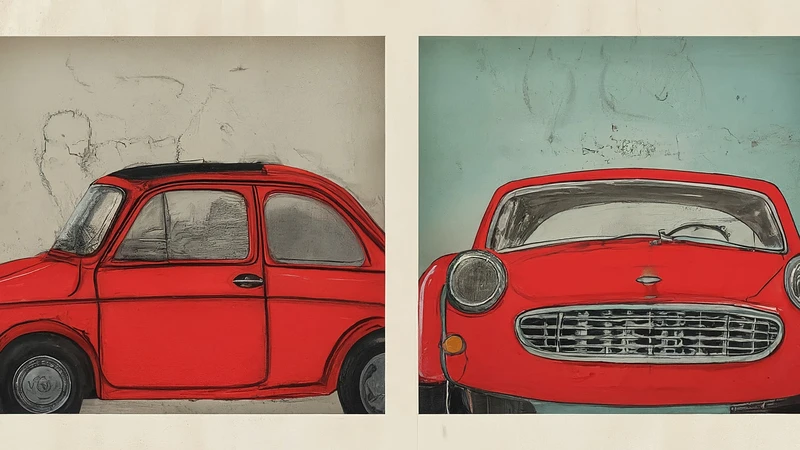
- bello/a (beautiful, nice): un bel film (a good film), una bella macchina (a nice car)
- bravo/a (good, skilled): un bravo dottore (a good doctor), una brava studentessa (a good student)
- buono/a (good, kind): un buon amico (a good friend), una buona idea (a good idea) - Note: buono often refers to moral goodness or quality, while bello refers to appearance or enjoyment.
- brutto/a (ugly, bad): una brutta giornata (a bad day)
- caro/a (dear): mio caro amico (my dear friend) - Note: caro after the noun means expensive! (un vestito caro - an expensive dress)
- cattivo/a (bad, naughty): un cattivo odore (a bad smell)
- giovane (young): un giovane uomo (a young man)
- grande (big, great): una grande città (a big city) - Note: grande before the noun can mean ‘great’, while after it usually means ’large/big’. Un grand’uomo (a great man) vs. Un uomo grande (a tall/large man).
- lungo/a (long): una lunga strada (a long road)
- nuovo/a (new): la mia nuova casa (my new house) - Note: nuovo before the noun means ’new to me/another’, while after it means ‘brand new’. Una macchina nuova (a brand new car) vs. La mia nuova macchina (my new car, which might be second-hand but is new for me).
- piccolo/a (small): una piccola casa (a small house)
- stesso/a (same): lo stesso problema (the same problem)
- vecchio/a (old): un vecchio amico (an old friend - meaning long-time friend) vs. un amico vecchio (an elderly friend).
- vero/a (true, real): un vero amico (a true friend)
Emphasis or Poetic Effect: Placing an adjective before the noun can sometimes add emphasis or create a slightly more literary or subjective feel. It draws attention to the quality itself.
My advice? Stick to putting adjectives after the noun as your default rule. As you get more exposure to Italian, you’ll develop a feel for which ones commonly go before and when Italians choose to place them there for effect. When in doubt, put it after!
Asking Questions in Italian: Word Order Changes
How do you ask questions in Italian? There are a few ways the word order shifts.
Yes/No Questions
For questions that can be answered with a simple “sì” or “no”, you often don’t need to change the word order much from a statement. You mainly rely on rising intonation at the end of the sentence.
- Statement: Marco mangia la pizza. (Marco eats the pizza.)
- Question: Marco mangia la pizza? ↗ (Does Marco eat the pizza?) - The word order is the same, just the intonation changes.
Sometimes, especially for emphasis or clarity, you can invert the subject and verb, placing the verb before the subject:
- Mangia Marco la pizza? ↗ (Does Marco eat the pizza?) - This sounds a bit more formal or emphatic.
- Vieni alla festa? ↗ (Are you coming to the party?) - Here, the subject “tu” is omitted, which is very common.
- È buono questo vino? ↗ (Is this wine good?) - Verb è comes before the subject questo vino.
Using rising intonation on a statement is the most common and natural way for simple yes/no questions in everyday speech.
Questions with Question Words
When you use question words (interrogative pronouns/adverbs), the structure usually changes. These words typically come at the beginning of the sentence, followed by the verb, and then often the subject (though the subject might be omitted or placed later).
Common question words:
- Chi? (Who?)
- Cosa? / Che cosa? / Che? (What?) - Cosa is very common in everyday speech.
- Dove? (Where?)
- Quando? (When?)
- Come? (How?)
- Perché? (Why?) - Also means “because”.
- Quanto/a/i/e? (How much/many?)
Examples:
- Chi parla? (Who is speaking?) - Question word + Verb
- Cosa mangi? (What are you eating?) - Question word + Verb (Subject ’tu’ implied)
- Dove abita Maria? (Where does Maria live?) - Question word + Verb + Subject
- Quando parte il treno? (When does the train leave?) - Question word + Verb + Subject
- Come stai? (How are you?) - Question word + Verb (Subject ’tu’ implied)
- Perché studi italiano? (Why are you studying Italian?) - Question word + Verb + Subject (’tu’ implied) + Object
- Quanti anni hai? (How old are you? - Literally: How many years do you have?) - Question word + Noun + Verb (Subject ’tu’ implied)
So, remember: Question word + Verb + (Subject) + (Rest of sentence)?
Handling Pronouns: A Key Part of Italian Sentences
Ah, pronouns. Those little words like mi, ti, lo, la, ci, vi, gli, le, ne… they are essential in Italian, but their placement can be tricky! They usually come directly before the conjugated verb. This is a major difference from English, where they often come after.
Let’s break down the most common types:
Direct Object Pronouns
These replace the direct object (the ‘what?’ or ‘whom?’ after the verb).
- mi (me)
- ti (you - singular informal)
- lo (him, it - masculine)
- la (her, it - feminine)
- ci (us)
- vi (you - plural or singular formal)
- li (them - masculine)
- le (them - feminine)
Placement: Before the conjugated verb.
- Vedo Marco. -> Lo vedo. (I see Marco. -> I see him.)
- Mangio la mela. -> La mangio. (I eat the apple. -> I eat it.)
- Chiamano noi. -> Ci chiamano. (They call us.)
- Comprate i libri? -> Li comprate? (Do you buy the books? -> Do you buy them?)
- Ascolto te. -> Ti ascolto. (I listen to you.)
Indirect Object Pronouns
These replace the indirect object (the ’to whom?’ or ‘for whom?’ after the verb). Often used with verbs like dare (to give), dire (to say), telefonare (to call), piacere (to like).
- mi (to me)
- ti (to you - singular informal)
- gli (to him, to them - common usage for plural now)
- le (to her)
- ci (to us)
- vi (to you - plural or singular formal)
- loro (to them - placed after the verb, less common in speech than ‘gli’)
Placement: Before the conjugated verb (except ’loro’).
- Parlo a Maria. -> Le parlo. (I speak to Maria. -> I speak to her.)
- Telefono a te. -> Ti telefono. (I call you.)
- Danno un regalo a Marco. -> Gli danno un regalo. (They give a gift to Marco. -> They give him a gift.)
- Scrivono ai loro amici. -> Gli scrivono. (They write to their friends. -> They write to them.) - Using ‘gli’ for plural is very common. Alternatively, Scrivono loro. (placed after).
- Il gelato piace a me. -> Il gelato mi piace. (I like ice cream. - Literally: Ice cream is pleasing to me.)
Combined Pronouns (Double Object Pronouns)
This is where it gets fun! When you have both an indirect and a direct object pronoun in the same sentence, they combine into one unit, still placed before the conjugated verb.
Rule: Indirect pronoun comes first, then the direct pronoun.
AND: The ‘i’ in mi, ti, ci, vi changes to ’e’ when followed by lo, la, li, le, ne. AND: gli and le (indirect) combine with lo, la, li, le, ne to become glie- + direct pronoun (written as one word).
Let’s see it in action:
- Dai il libro a me? -> Me lo dai? (Do you give the book to me? -> Do you give it to me?) - mi + lo = me lo
- Dico la verità a te. -> Te la dico. (I tell the truth to you. -> I tell it to you.) - ti + la = te la
- Mandiamo i pacchi a voi. -> Ve li mandiamo. (We send the packages to you. -> We send them to you.) - vi + li = ve li
- Porta le fiori a Maria? -> Gliele porta? (Does he bring the flowers to Maria? -> Does he bring them to her?) - le + le = gliele
- Offrono il caffè a Marco? -> Glielo offrono? (Do they offer the coffee to Marco? -> Do they offer it to him?) - gli + lo = glielo
- Spiegano la lezione agli studenti? -> Gliela spiegano? (Do they explain the lesson to the students? -> Do they explain it to them?) - gli (plural) + la = gliela
This takes practice, but it’s fundamental for fluent Italian!
Pronoun Placement with Infinitives, Gerunds, and Imperatives
The “before the verb” rule changes with some verb forms:
Infinitive (-are, -ere, -ire): Pronouns attach to the end (after dropping the final -e).
- Voglio vedere il film. -> Voglio vederlo. (I want to see the film. -> I want to see it.)
- Devo dire la verità a te. -> Devo dirtela. (I must tell the truth to you. -> I must tell it to you.)
- Possiamo comprare i biglietti per voi? -> Possiamo comprarveli? (Can we buy the tickets for you? -> Can we buy them for you?)
Gerund (-ando, -endo): Pronouns attach to the end.
- Sto guardando la TV. -> Sto guardandola. (I am watching TV. -> I am watching it.)
- Stavo parlando a Marco. -> Stavo parlandogli. (I was talking to Marco. -> I was talking to him.)
- Stanno mangiando la pizza. -> Stanno mangiandola. (They are eating the pizza -> They are eating it.)
Affirmative Imperative (Commands - tu, noi, voi): Pronouns attach to the end. (Note: some ’tu’ forms double the consonant before attaching).
- Mangia la mela! -> Mangiala! (Eat the apple! -> Eat it!)
- Dimmi la verità! (Tell me the truth!) -> Dimmela! (Tell it to me!) - dire has irregular imperative di’ which doubles for mi, ti, etc.
- Parla a noi! -> Parlaci! (Speak to us!)
- Prendete il caffè! -> Prendetelo! (Have the coffee! - plural ‘you’)
Negative Imperative (Don’t…): Pronouns go before the verb (like the standard rule).
- Non mangiare la mela! -> Non la mangiare! (Don’t eat the apple! -> Don’t eat it!)
- Non dire bugie a me! -> Non me le dire! (Don’t tell lies to me! -> Don’t tell them to me!)
- Non parlate a lui! -> Non gli parlate! (Don’t talk to him! - plural ‘you’)
Mastering pronoun placement, especially combined pronouns and their variations with different verb forms, is a huge step towards sounding natural in Italian. Listen carefully to native speakers and practice these patterns!
Connecting Ideas: Using Subordinate Clauses
Simple sentences are great, but to express more complex thoughts, you need to connect ideas. That’s where subordinate clauses come in. These are parts of a sentence that depend on the main part (the main clause) and often start with specific conjunctions.
Clauses starting with ‘che’ (that)
Che is incredibly common and versatile. It often introduces clauses that explain what someone thinks, knows, hopes, or feels.
- So che Maria è italiana. (I know that Maria is Italian.) - So is the main clause, che Maria è italiana is the subordinate clause telling us what I know.
- Penso che tu sia stanco. (I think that you are tired.) - Here, penso expresses an opinion, so the verb in the che clause (sia) uses the subjunctive mood (conguntivo). This is a big topic, but basically, the subjunctive is used after verbs of opinion, doubt, emotion, desire, etc., in the che clause.
- Credo che faccia freddo. (I believe that it’s cold.) - Subjunctive faccia
- Spero che tu venga alla festa. (I hope that you come to the party.) - Subjunctive venga
- Sono felice che tu sia qui. (I’m happy that you are here.) - Subjunctive sia
- È importante che tu studi. (It’s important that you study.) - Impersonal expressions often trigger the subjunctive.
Don’t worry too much about mastering the subjunctive right away, but be aware that it often follows che when the main clause expresses uncertainty or subjectivity.
Other Common Conjunctions
- Quando (when): Introduces time clauses.
- Ti chiamo quando arrivo a casa. (I’ll call you when I get home.)
- Mentre (while): Indicates actions happening simultaneously.
- Leggo il giornale mentre faccio colazione. (I read the newspaper while I have breakfast.)
- Dove (where): Introduces place clauses.
- Non so dove ho messo le chiavi. (I don’t know where I put the keys.)
- Perché (because/why): Introduces clauses of reason or purpose.
- Studio italiano perché voglio visitare l’Italia. (I study Italian because I want to visit Italy.)
- Non capisco perché sei triste. (I don’t understand why you are sad.) - Here it introduces an indirect question.
- Come (how/as/like):
- Fai come dico io. (Do as I say.)
- Non so come funziona. (I don’t know how it works.)
- Se (if): Introduces conditional or indirect questions (see conditionals below).
- Vengo se non piove. (I’ll come if it doesn’t rain.)
- Mi chiedo se Marco è già partito. (I wonder if Marco has already left.)
Using these conjunctions allows you to build much richer and more detailed sentences.
Adding Detail with Relative Clauses
Relative clauses are like descriptive add-ons for nouns. They tell you which person or thing you’re talking about. In Italian, the main relative pronouns are che and cui.
Using ‘che’
Che (who, whom, that, which) is used when the noun you’re describing is the subject or direct object of the relative clause. It’s invariable (doesn’t change).
- L’uomo che parla è mio fratello. (The man who is speaking is my brother.) - che refers to l’uomo and is the subject of parla.
- Il libro che leggo è interessante. (The book that I am reading is interesting.) - che refers to il libro and is the direct object of leggo.
- Ho incontrato la ragazza che lavora con te. (I met the girl who works with you.) - che refers to la ragazza and is the subject of lavora.
- Dov’è la torta che ho comprato? (Where is the cake that I bought?) - che refers to la torta and is the direct object of ho comprato.
Using ‘cui’
Cui (whom, which) is used when the noun you’re describing is linked to the relative clause by a preposition (di, a, da, in, con, su, per, tra/fra).
- La persona a cui penso sei tu. (The person I’m thinking about is you.) - pensare a qualcuno -> a cui penso.
- È un film di cui parlano tutti. (It’s a film everyone is talking about.) - parlare di qualcosa -> di cui parlano.
- La città in cui vivo è piccola. (The city in which I live is small.) - vivere in un posto -> in cui vivo.
- L’amico con cui esco stasera è simpatico. (The friend I’m going out with tonight is nice.) - uscire con qualcuno -> con cui esco.
- Il motivo per cui sono qui è importante. (The reason why I am here is important.) - essere qui per un motivo -> per cui sono qui.
You can also use il quale / la quale / i quali / le quali instead of che or preposition + cui. They are more formal and change according to the gender and number of the noun they refer to.
- L’uomo, il quale parla, è mio fratello. (More formal than che)
- La città nella quale vivo è piccola. (More formal than in cui)
For most situations, che and cui are perfectly fine and much more common.
Talking About Possibilities: Conditional Sentences (‘Se’ Clauses)
Conditional sentences talk about hypothetical situations and their consequences, often using se (if). There are three main types:
Type 1: Real Condition (Likely/Possible)
- Structure: Se + Presente Indicativo, Presente Indicativo / Futuro Semplice / Imperativo
- Meaning: If this happens (real possibility), then this will happen / usually happens / do this.
- Se ho tempo, vengo alla festa. (If I have time, I’ll come to the party.)
- Se piove, prendo l’ombrello. (If it rains, I take the umbrella.)
- Se studi, impari. (If you study, you learn.)
- Se hai bisogno di aiuto, chiamami! (If you need help, call me!)
Type 2: Hypothetical Condition (Unlikely/Imaginary - Present/Future)
- Structure: Se + Imperfetto Congiuntivo, Condizionale Presente
- Meaning: If this happened (but it probably won’t / isn’t), then this would happen.
- Se avessi tempo, verrei alla festa. (If I had time, I would come to the party - implies I don’t have time.)
- Se fossi ricco, comprerei una Ferrari. (If I were rich, I would buy a Ferrari - implies I’m not rich.)
- Se parlassimo italiano, capiremmo il film. (If we spoke Italian, we would understand the film - implies we don’t speak it well enough.)
Type 3: Hypothetical Condition (Impossible - Past)
- Structure: Se + Trapassato Congiuntivo, Condizionale Passato
- Meaning: If this had happened (in the past, but it didn’t), then this would have happened.
- Se avessi avuto tempo, sarei venuto alla festa. (If I had had time, I would have come to the party - implies I didn’t have time and didn’t go.)
- Se tu avessi studiato di più, avresti passato l’esame. (If you had studied more, you would have passed the exam - implies you didn’t study enough and failed.)
- Se fossi partito prima, non avrei perso il treno. (If I had left earlier, I wouldn’t have missed the train - implies I left late and missed it.)
Conditional sentences, especially types 2 and 3 involving the subjunctive and conditional moods, require some grammar study, but they are essential for expressing nuanced possibilities and regrets.
Flexibility: Changing Word Order for Emphasis
While SVO is the standard, Italian offers flexibility to change word order for emphasis, especially in spoken language. You might put the object or another part of the sentence first to highlight it.
- Standard SVO: Io mangio la pizza. (I eat the pizza.)
- Object First (Emphasis on pizza): La pizza mangio io! (It’s the pizza that I eat! / As for the pizza, I eat it.) - Often uses a direct object pronoun as well (la).
- Standard: Marco ha rotto il vaso. (Marco broke the vase.)
- Subject Last (Emphasis on who did it): Il vaso l’ha rotto Marco! (It was Marco who broke the vase!) - Again, uses the pronoun (l’).
- Standard: Vado al cinema stasera. (I’m going to the cinema tonight.)
- Adverb First (Emphasis on time): Stasera vado al cinema. (Tonight, I’m going to the cinema.)
You don’t need to use these variations right away, but recognizing them helps understand spoken Italian better. It shows how word order can be manipulated to change the focus of the sentence.
Wrapping Up: Building Your Italian Sentences
Whew! We’ve covered a lot, from the basic SVO structure to the twists and turns of adjective placement, question formation, those crucial pronouns, and connecting ideas with clauses.
Understanding Italian sentence structure isn’t about memorizing rigid rules but about getting a feel for the flow and logic of the language. Key takeaways:
- Start with SVO (Subject-Verb-Object) as your base.
- Remember subjects are often dropped (look at the verb!).
- Place most adjectives after the noun.
- Use rising intonation for yes/no questions or question words at the start.
- Get comfortable with object pronouns (mi, ti, lo, la…) coming before the conjugated verb or attached to infinitives/gerunds/imperatives.
- Use conjunctions like che, quando, perché, se to link clauses.
- Use che and cui to add descriptions with relative clauses.
My best advice? Listen a lot. Read a lot. Pay attention to how native speakers build their sentences. Don’t be afraid to make mistakes – that’s how we learn! Try constructing your own sentences, starting simple and gradually adding complexity with clauses and different pronoun structures.
Learning grammar is a tool to help you communicate more effectively and understand this beautiful language better. It takes time and practice, so be patient with yourself.
Spero che questo post ti sia utile! (I hope this post is helpful to you!) If you have questions, feel free to ask.
Buono studio! (Happy studying!)