Ciao! I’m Giulia, your Italian teacher. As a native speaker, one thing I hear a lot is how beautiful Italian sounds. People often describe it as musical or romantic. And while that’s lovely to hear, I want to talk about why it sounds that way and how you, as a learner, can get closer to that authentic Italian pronunciation.
It’s not just about knowing words; it’s about how you say them. Italian phonetics, the study of sounds, is key. Getting the sounds right makes a huge difference in how well you’re understood and how confident you feel speaking. Forget vague ideas about “melody”; let’s look at the real building blocks of Italian sound. This isn’t about perfection, but about understanding and practicing the core elements that make Italian, well, Italian.
In this guide, I’ll walk you through the essentials: the clear Italian vowels, the sometimes tricky Italian consonants (especially those doubles!), where to put the stress in words, and the natural rhythm of spoken Italian. I’ll give you concrete examples and tips based on my experience teaching learners just like you. Let’s get started!
Why Italian Sounds the Way It Does: The Basics
Every language has its own sound system. What makes Italian distinct? A few key things:
- Clear Vowels: Italian vowels are generally “pure” – they don’t glide into other sounds like English vowels often do.
- Consistent Spelling-to-Sound Rules: Once you learn the rules, you can usually figure out how to pronounce a word just by looking at it. There are exceptions, of course, but it’s much more consistent than English.
- Syllable-Timed Rhythm: Italian tends to give roughly equal time to each syllable, creating a steady rhythm, unlike the stress-timed rhythm of English where stressed syllables get more time.
- Double Consonants: These are pronounced longer and stronger than single consonants, and they change the meaning of words. This is a big one for learners!
- Specific Consonant Sounds: Sounds like the rolled ‘r’, ‘gli’, and ‘gn’ are characteristic of Italian.
Understanding these elements is the first step to improving your Italian accent. It’s not magic, it’s mechanics! 
The Heart of Italian Sound: Pure Vowels
Let’s start with the vowels, the core of Italian sound. There are 5 written vowels (A, E, I, O, U), but phonetically, there are 7 sounds because ‘E’ and ‘O’ can each be pronounced in two ways: open or closed.
- A (ah): Always open and clear, like the ‘a’ in “father” or “car”. Never like the ‘a’ in “cat” or “make”.
- Example: casa (house), pasta, mamma
- E (eh/ay): This can be tricky.
- Closed E (é): Like the ’e’ in “hey” but shorter, without the ‘y’ glide at the end. Think of the sound in “bet” but slightly higher.
- Example: perché (why/because - the accent mark tells you it’s closed here), mela (apple), vedere (to see)
- Open E (è): Like the ’e’ in “bet” or “met”.
- Example: bène (well), caffè (coffee - again, the accent helps), letto (bed)
- Native speaker tip: Don’t stress too much about open/closed ’e’ initially. Context usually makes the meaning clear, and regional accents vary. The key is to avoid the English diphthong (like in “say” which glides from ’e’ to ‘i’). Just keep the sound crisp.
- Closed E (é): Like the ’e’ in “hey” but shorter, without the ‘y’ glide at the end. Think of the sound in “bet” but slightly higher.
- I (ee): Always like the ’ee’ in “see” or “machine”. Never like the ‘i’ in “sit”.
- Example: amici (friends), pizza, fine (end)
- O (oh/aw): Similar to ‘E’, ‘O’ has two sounds.
- Closed O (ó): Like the ‘o’ in “go” or “note” but shorter, without the ‘w’ glide at the end.
- Example: sole (sun), nome (name), molto (much/very)
- Open O (ò): Like the ‘o’ in “cot” or the ‘aw’ in “law” (depending on your English accent).
- Example: pòrta (door), nòtte (night), còsa (thing)
- Native speaker tip: Again, don’t obsess over open/closed ‘o’ at first. Focus on keeping the sound pure, not gliding into a ‘w’ sound like in English “go”.
- Closed O (ó): Like the ‘o’ in “go” or “note” but shorter, without the ‘w’ glide at the end.
- U (oo): Always like the ‘oo’ in “moon” or “flute”. Never like the ‘u’ in “cup” or “mute”.
- Example: luna (moon), tutto (all/everything), musica (music)
The main takeaway for Italian vowels? Keep them short, crisp, and pure. Avoid the diphthongs (gliding sounds) common in English vowels. This alone will make your Italian sound much more authentic.
The Backbone: Italian Consonants
Italian consonants are often perceived as similar to English, but there are crucial differences, especially with double consonants and specific sounds.
Simple Consonants
Many consonants like B, D, F, M, N, P, Q, T, V sound very similar to their English counterparts. Just pronounce them clearly. The L is usually a “clear L” (like in “light”) rather than the “dark L” sometimes heard at the end of English words (like in “full”). The H is always silent! It’s mainly used to affect the pronunciation of ‘C’ and ‘G’ (see below) or in forms of the verb avere (to have) like ho, hai, ha, hanno.
Double Consonants (Il Raddoppiamento): A Must-Know!
This is probably one of the most important features of Italian pronunciation that learners need to master. Double consonants are not just written twice; they are pronounced differently. You need to hold the consonant sound for longer, creating a slight pause or intensity before the following vowel. This changes the meaning of words completely!
Compare:
- pala (shovel) vs palla (ball)
- caro (dear) vs carro (cart/wagon)
- sete (thirst) vs sette (seven)
- fato (fate) vs fatto (fact / done)
- note (notes) vs notte (night)
To pronounce them, slightly hesitate or lengthen the consonant sound. Imagine putting a tiny pause on the consonant. For sounds like ’l’, ’m’, ’n’, ‘r’, ’s’, ‘f’, ‘v’, you literally hold the sound longer. For stop consonants like ‘p’, ’t’, ‘c’, ‘b’, ’d’, ‘g’, you build up a bit more pressure before releasing the sound. It takes practice, but listening carefully and trying to imitate is key. Mastering double consonants will drastically improve your intelligibility. 
Tricky Sounds for Learners
Some sounds consistently challenge learners. Let’s break them down:
- The Rolled R (r/rr): Yes, the infamous Italian ‘r’. It’s an alveolar trill, made by vibrating the tip of your tongue against the ridge behind your upper teeth.
- Single ‘r’ (r): Usually a single tap of the tongue (like the ’tt’ in American English “butter” or “ladder”). Example: caro (dear), parola (word), mare (sea).
- Double ‘rr’ (rr): A full, sustained trill. Hold the vibration longer. Example: carro (cart), terra (earth/land), guerra (war).
- Native speaker tip: This takes practice! Don’t get discouraged. Start by trying to make the single tap ‘r’. Listen to native speakers. Some people find it physically harder than others, but persistence often pays off. Even if you can’t get a perfect trill, aiming for the tap ‘r’ is better than using an English ‘r’.
- Hard vs. Soft C and G: The sound depends on the vowel that follows.
- C:
- Hard ‘k’ sound (like “cat”) before A, O, U, or H: casa (house), cosa (thing), cultura (culture), anche (also).
- Soft ‘ch’ sound (like “cheese”) before E or I: cena (dinner), cinema, pace (peace).
- G:
- Hard ‘g’ sound (like “go”) before A, O, U, or H: gatto (cat), gola (throat), gusto (taste), larghi (wide - plural).
- Soft ‘j’ sound (like “judge”) before E or I: gelato (ice cream), giardino (garden), pagina (page).
- C:
- The ‘Gli’ Sound (lj): This sound doesn’t really exist in English. It’s similar to the ’lli’ in “million”, but the tongue is flatter against the palate.
- Example: figlio (son), aglio (garlic), famiglia (family), meglio (better).
- Native speaker tip: Try starting to say ’l’ but flatten your tongue against the roof of your mouth and push the air out around the sides, aiming for a ‘y’ sound blended in. Listen carefully and imitate. Avoid just saying ’lee’.
- The ‘Gn’ Sound (nj): Like the ’ny’ in “canyon” or the Spanish ‘ñ’.
- Example: bagno (bathroom), lagna (complaint, also lasagna!), gnocchi, ogni (every).
- Native speaker tip: This is usually easier than ‘gli’. Think of the word “onion”.
- Voiced vs. Voiceless S: Italian ‘S’ can sound like an English ’s’ (voiceless) or ‘z’ (voiced).
- Voiceless ’s’ (like “snake”): Usually at the start of a word before a vowel, when doubled (ss), before voiceless consonants (c, f, p, q, t). Example: sole (sun), cassa (cash register), storia (history), pasta.
- Voiced ‘z’ (like “zoo”): Usually between two vowels, or before voiced consonants (b, d, g, l, m, n, r, v). Example: casa (house), rosa (rose), sbaglio (mistake), chismo (schism).
- Native speaker tip: Rules exist, but regional variations are common here. Listening is your best guide. Generally, the ’s’ between vowels is voiced, but not always.
- The ‘Z’ Sounds: Italian ‘Z’ also has two sounds.
- Voiceless ’ts’ (like “cats”): Example: pizza, grazie (thank you), stazione (station).
- Voiced ‘dz’ (like “adze”): Example: zaino (backpack), mezzo (half/middle), azzurro (blue).
- Native speaker tip: Again, rules are complex and have exceptions/variations. Often, ‘zz’ is voiceless ’ts’ but not always (azzurro). Listen and imitate common words.
![Whimsical illustration visualizing tricky Italian sounds: a tongue making a spiral for rolled 'R', a canyon shape for 'Gn', and flowing lines for 'Gli'.]()
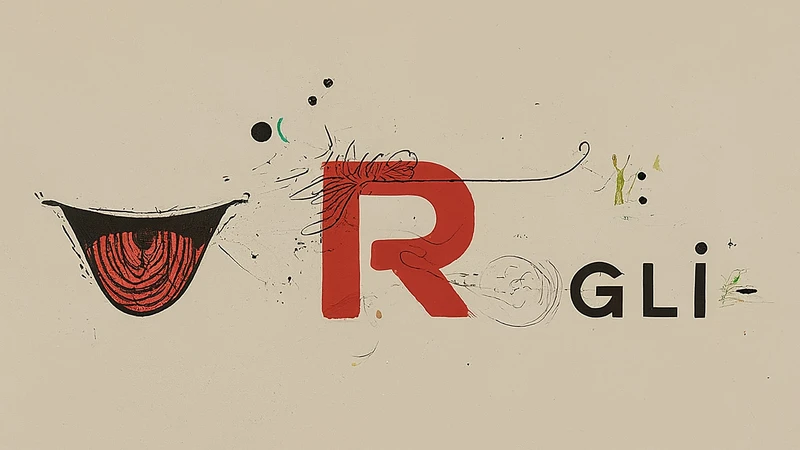
Don’t feel overwhelmed! Focus on the most impactful areas first: double consonants, pure vowels, and the c/g sounds.
Finding the Beat: Stress and Accentuation in Italian
Knowing where to put the emphasis or stress (l’accento) in an Italian word is crucial for pronunciation and sometimes even meaning. Unlike English, where stress can seem unpredictable, Italian has clearer patterns.
- The General Rule: Penultimate Syllable (Parole Piane): Most Italian words are stressed on the second-to-last syllable. This is the default.
- Examples: parola (word), mangiare (to eat), finestra (window), tavolo (table). If you’re unsure, guessing the stress is here is often correct.
- Stress on the Last Syllable (Parole Tronche): When the stress falls on the final vowel, Italian requires a written accent mark (
´or). This makes them easy to spot.- Examples: città (city), perché (why/because), caffè (coffee), più (more), virtù (virtue).
- Stress on the Third-to-Last Syllable (Parole Sdrucciole): These are also common, especially with longer words, verbs in certain tenses, and some common words. No written accent is required unless it falls on the last syllable (which is rare for these).
- Examples: macchina (car), tavolo (table - wait, I listed this before! Stress can vary slightly or seem close, focus on the main beat), sabato (Saturday), numero (number), telefono (telephone).
- Stress on the Fourth-to-Last Syllable (Parole Bisdrucciole): Less common, often found with verbs + attached pronouns.
- Examples: telefonano (they telephone), dimenticano (they forget).
Written Accents (´ and ): Besides marking stress on the final syllable, written accents are used to:
- Distinguish between words that look the same (homographs):
- e (and) vs è (is)
- la (the/her) vs là (there)
- si (oneself/reflexive) vs sì (yes)
- da (from/by) vs dà (gives)
- di (of) vs dì (day - poetic/formal)
- Indicate open or closed ’e’/‘o’ when the stress falls on the last syllable (though
évsèandóvsòusage isn’t always perfectly consistent nationwide). Example: perché (closed e), caffè (open e).
How Stress Changes Meaning: Sometimes, changing the stress changes the word entirely!
- ancora (anchor) vs ancora (again/still)
- capitano (they happen / [noun] captain) vs capitano (captain) vs capitanò (he/she captained - past tense)
- principi (princes) vs principi (principles)
Paying attention to Italian stress patterns is vital for sounding natural and being understood correctly. Listen for the emphasis when native speakers talk. 
The Melody of Speech: Italian Rhythm and Intonation
Beyond individual sounds and stress, the overall flow matters.
- Syllable-Timed Rhythm: As mentioned, Italian tends to give each syllable a similar duration. This creates a more even, staccato rhythm compared to English, where stressed syllables are long and unstressed ones are often reduced or shortened. Think of Italian like steady drum beats: ta-ta-ta-ta. English is more like: TA-da-ta-TA-da.
- Practical impact: Try to pronounce each syllable clearly, especially the vowels, even in unstressed positions. Avoid reducing vowels to a “schwa” (the ‘uh’ sound) like in English “about” or “sofa”. The word telefono is te-le-fo-no, not TEL-uh-fohn.
- Intonation: The “melody” or pitch variation in speech.
- Statements: Generally have a falling intonation towards the end of the sentence.
- Yes/No Questions: Typically have a rising intonation towards the end. “Vieni?” (Are you coming?) goes up.
- Wh- Questions (who, what, where, etc.): Often have a falling intonation, similar to statements. “Dove vai?” (Where are you going?) might fall.
- Native speaker tip: Intonation carries emotion and nuance. Listen to how Italians express surprise, enthusiasm, doubt – the pitch changes significantly. Copying these patterns makes your speech much more engaging.
Getting the rhythm and intonation right makes your Italian sound much more fluid and natural, even if your grammar isn’t perfect yet.
Tips from a Native Speaker: How to Practice Your Italian Pronunciation
Okay, that was a lot of information! How can you actually put it into practice? Here are my tips:
- Listen Actively: Don’t just hear, listen. Pay attention to the specific sounds, the rhythm, the intonation.
- Music: Italian songs are great. Try singing along! Pop, classic, whatever you like.
- Movies/TV Shows: Watch with Italian audio. Start with subtitles if needed, then try without. Mimic short phrases.
- Podcasts/Audiobooks: Find topics you enjoy. Listen during your commute or chores.
- Native Speakers: If you can, talk to native speakers! Or just listen to conversations online or in person.
- Imitate and Record Yourself: This is crucial. Choose a short phrase or sentence spoken by a native speaker. Record yourself saying it. Compare your recording to the original. What’s different? Vowels? Consonants? Stress? Rhythm? Be honest with yourself. It might feel strange at first, but it’s incredibly effective.
- Focus on Your Difficult Sounds: Identify 1-3 sounds that you struggle with the most (maybe the rolled ‘r’, ‘gli’, or double consonants). Dedicate specific practice time to just those sounds. Find words with those sounds and practice them slowly, then faster.
- Don’t Be Afraid to Exaggerate Initially: Sometimes, to break an old habit (like an English ‘r’), you need to exaggerate the new sound (the Italian ‘r’). Overdo the tongue vibration or the length of double consonants. You can refine it later, but exaggeration helps build muscle memory.
- Practice Double Consonants Daily: Seriously, these are so important. Find pairs like caro/carro, pala/palla and say them out loud, focusing on lengthening the double sound. This alone will make a huge difference.
- Slow Down: Don’t try to speak too quickly at first. Focus on pronouncing each sound and syllable clearly. Speed will come naturally later. Accuracy first!
- Find a Language Partner or Tutor: Getting feedback from someone who knows the sounds well (ideally a native speaker or experienced teacher) is invaluable. They can pinpoint issues you might not notice yourself.
Pronunciation takes time and consistent effort. Be patient with yourself, celebrate small improvements, and keep practicing! 
Conclusion: Embrace the Sounds of Italian
So, there you have it – a look into the world of Italian phonetics and pronunciation from my perspective as a native speaker and teacher. We’ve covered the pure vowels, the single and crucial double consonants, the patterns of stress, and the rhythm of speech.
Understanding these elements moves you beyond just learning words on a page. It helps you connect with the real, living sound of the language. It makes you easier to understand and helps you understand Italians better too.
Improving your pronunciation isn’t about losing your own accent entirely, but about mastering the key features that make Italian sound Italian. It takes practice, focused listening, and a willingness to step outside your comfort zone.
I encourage you to pay attention to these details as you continue your Italian learning journey. Listen carefully, practice deliberately, and don’t be afraid to make sounds that feel new or strange at first. Bit by bit, you’ll find your own Italian voice. In bocca al lupo (good luck)!