As an Italian native and language teacher, I often get asked about the best way to learn lingua italiana. My answer always comes back to the same thing: you can’t truly learn Italian without understanding cultura italiana. They aren’t just connected; in many ways, they are the same thing. Our language grew out of our history, it reflects the beauty we see in art, it tastes like our food, and it moves with our hands.
When you think of Italy, maybe you picture ancient Roman ruins, Renaissance paintings, steaming plates of pasta, or passionate conversations in a busy piazza. These images are spot on, and the thread tying them all together is the Italian language. It’s more than just words; it’s the sound of our history, the color of our art, the flavor of our cucina italiana. Let me share with you, from my perspective, how deeply intertwined these elements really are. This isn’t just a lesson; it’s a look into the Italian soul.
Where Italian Came From: History Shaping Our Words
You can’t talk about Italian without talking about history. Our language didn’t just appear; it evolved over centuries, shaped by invasions, empires, poets, and everyday people.
From Latin Roots to Regional Tongues
Like French, Spanish, and Portuguese, Italian comes directly from Latin, the language of the Roman Empire. But it wasn’t the classical Latin of Cicero or Virgil that people spoke in daily life. It was Vulgar Latin, the language of soldiers, merchants, and farmers. As the Roman Empire faded, different regions of the Italian peninsula became isolated. Mountains, seas, and political divisions meant that the Vulgar Latin spoken in Sicily started sounding very different from the one spoken in Milan or Venice. These evolved into the dialetti italiani (Italian dialects) – which are often distinct languages in their own right, not just variations of standard Italian.
Growing up, I remember my grandparents switching effortlessly between standard Italian and our local dialect. The dialect was warmer, more intimate, filled with unique expressions tied to our specific region. Even today, dialects are alive and well. While everyone learns standard Italian in school, the local dialect is often the language of home, of jokes, of expressing deep emotion. It’s a layer of our identity, a direct link to our local history. Trying to understand Italy without acknowledging dialects is like seeing a picture in black and white – you miss the full color.
Dante and the Tuscan Takeover
So how did we get one standard Italian language? For a long time, Latin remained the language of writing, of the Church, of official business. But in the 13th and 14th centuries, something incredible happened, particularly in Tuscany, and specifically Florence. Writers like Dante Alighieri, Francesco Petrarca (Petrarch), and Giovanni Boccaccio decided to write their masterpieces not in Latin, but in the dialect spoken in Florence – il dialetto fiorentino.
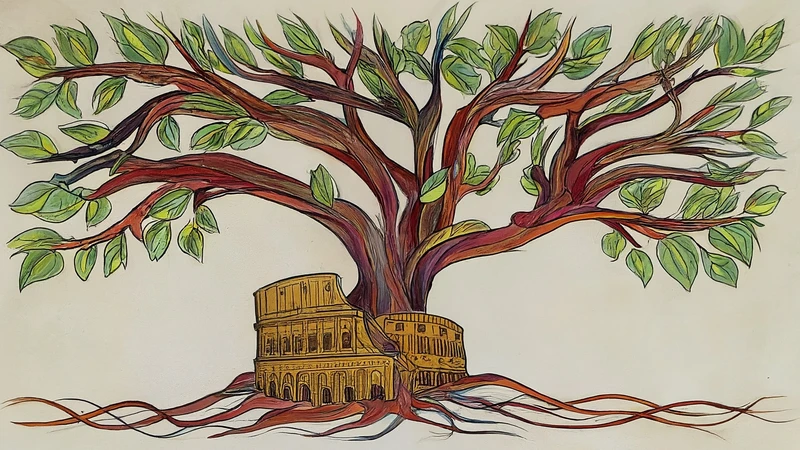
Dante’s Divina Commedia (Divine Comedy) wasn’t just a literary revolution; it was a linguistic one. By using the Florentine vernacular for such a monumental work, Dante showed that this “everyday” language was capable of expressing the highest philosophical, theological, and poetic ideas. His work was so influential, so widely read and admired, that the Tuscan dialect became the model for what we now know as standard Italian. It wasn’t imposed by decree, but its cultural prestige made it the natural choice. When Italy was finally unified in the 19th century (Risorgimento), the Tuscan-based Italian became the official language of the new nation, taught in schools to foster a shared identity.
But remember those dialects? They didn’t disappear. The tension and interplay between standard Italian and regional dialects is still a fascinating part of our linguistic landscape. It reflects our history: a collection of proud, distinct regions united under one flag, but still holding onto their local roots. Learning Italian means understanding this dynamic, appreciating the richness that comes from both the standard language and the local tongues.
Art You Can Hear: The Sound and Shape of Italian
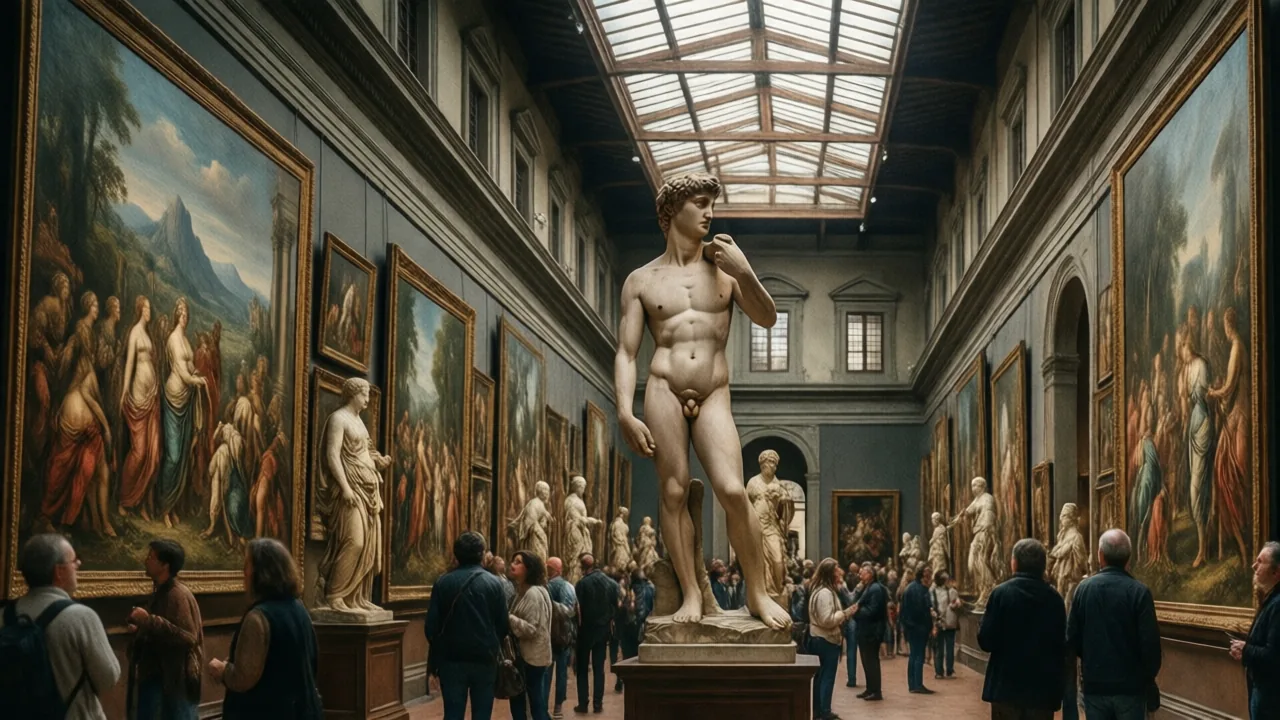
Italians are surrounded by art. It’s in our museums, our churches, our public squares, even in the design of everyday objects. And I believe this deep appreciation for beauty, harmony, and expression has shaped the sound and feel of our language.
The Music of Italian
People often describe Italian as musical or melodious. Why? Part of it is the vowel sounds. Italian has relatively few vowel sounds compared to English, and they are generally pure and clear. We also tend to end words with vowels, creating a smooth, flowing connection between words. Think about phrases like “mi amore” (my love) or “andiamo a mangiare” (let’s go eat) – there’s a natural rhythm and cadence.
This musicality isn’t accidental. Italy is the birthplace of opera, and much of the international vocabulary of music comes directly from Italian: allegro, andante, piano, forte, soprano, tenore. These words weren’t just chosen randomly; they reflect the Italian focus on expressing emotion and dynamics clearly and beautifully, just like we try to do in our speech. When I speak Italian, especially when I’m passionate about something, I feel that rhythm, that rise and fall of intonation – it feels like singing, almost!
Artistic Vocabulary
Beyond the sound, Italian art history has given the world (and the Italian language itself) specific terms that capture artistic concepts. Think of:
- Chiaroscuro: Literally “light-dark,” describing the dramatic use of contrasts in painting (think Caravaggio). We use it metaphorically too, to describe situations with strong contrasts.
- Sfumato: Meaning “smoked” or “blurred,” this is the technique Leonardo da Vinci used to create soft, hazy transitions between colors and tones, especially visible in the Mona Lisa’s smile. It evokes subtlety and nuance.
- Fresco: Meaning “fresh,” this refers to painting on wet plaster. The word itself feels immediate, capturing the technique.
- Affresco: The noun form for the fresco painting itself.
- Mezzotinto: A printmaking technique creating half-tones.
- Pittura: Painting.
- Scultura: Sculpture.
These aren’t just technical terms; they reflect a way of seeing the world, an appreciation for technique, beauty, and the power of visual expression. This vocabulary is woven into the language, showing how deeply art is ingrained in the Italian way of thinking and speaking. Learning these words isn’t just about art history; it’s about understanding the Italian emphasis on aesthetics and craftsmanship.
Tasting the Language: How Food (Cucina) Defines Us
You absolutely cannot talk about Italian culture without talking about cucina italiana. Food is central to Italian life. It’s about family, tradition, regional pride, and pleasure. And our language is full of flavor!
More Than Just Pizza and Pasta
Yes, the world knows pizza, pasta, espresso, gelato, cappuccino. These words have become global ambassadors for Italian food culture. But Italian food vocabulary goes so much deeper and reveals so much more about us.
First, regionality is key. Italy wasn’t unified until relatively recently, and regional cuisines are incredibly diverse, reflecting local ingredients, history, and traditions. The names of dishes often tell a story or point to their origin:
- Risotto alla Milanese: Saffron risotto from Milan (saffron likely introduced by Arabs via trade routes).
- Pasta alla Norma: A Sicilian pasta dish with eggplant, tomatoes, and ricotta salata, supposedly named after Bellini’s opera “Norma.”
- Bistecca alla Fiorentina: The famous Florentine steak, thick-cut and grilled. Its name firmly plants it in Florence.
- Orecchiette con le cime di rapa: “Little ears” pasta with turnip greens, a classic from Puglia. The pasta shape name is descriptive and charming.
Learning these names isn’t just memorizing vocabulary; it’s like taking a culinary tour of Italy. Each dish carries a piece of local identity. When I teach food vocabulary, I always encourage students to look up the origins of the names – it opens a window into history and geography.
The Rituals and the Words
Food in Italy is also about the rituals surrounding it, and the language reflects this:
- Antipasto: “Before the meal” – the appetizers that start the experience.
- Primo: The “first course,” usually pasta, risotto, or soup.
- Secondo: The “second course,” typically meat or fish.
- Contorno: The “side dish” served alongside the secondo.
- Dolce: The “sweet” course, dessert.
- Digestivo: A drink like amaro or grappa to “aid digestion” after the meal.
This structure shows a certain formality and appreciation for the progression of a meal. And then there’s the social aspect:
- Pranzo: Lunch, often the main meal of the day, especially on Sundays (pranzo della domenica), which can be a long, multi-course affair with family.
- Cena: Dinner, often lighter than lunch during the week.
- Aperitivo: A pre-dinner drink and snacks, a social ritual enjoyed in bars across Italy. It’s a time to unwind, chat, and whet the appetite. The word itself comes from Latin aperire, “to open.”
- Spuntino / Merenda: A snack, often for children in the afternoon.
These aren’t just words for meals; they represent social customs, ways of structuring time, and opportunities for connection. Saying “Facciamo un aperitivo?” (Shall we get an aperitivo?) is more than just asking for a drink; it’s an invitation to socialize, relax, and enjoy a specific cultural moment.
Food Idioms: Expressing Life Through Flavor
Our love for food even spills into our idiomatic expressions:
- Essere buono come il pane: “To be as good as bread.” (To be a very good, kind person). Bread is fundamental, essential, good.
- Non fare la MINESTRA riscaldata: “Don’t make reheated soup.” (Don’t try to rekindle an old relationship that already ended badly). Reheated soup is never as good as the fresh one.
- Sei come il prezzemolo: “You’re like parsley.” (You turn up everywhere!). Parsley is used in so many Italian dishes.
- Avere le mani in pasta: “To have one’s hands in the dough.” (To be involved or influential in something).
- Rompere le uova nel paniere: “To break the eggs in the basket.” (To ruin someone’s plans).
These expressions show how deeply food concepts are embedded in the way we think about life, people, and situations. They add color and flavor to our everyday language. When I hear these idioms, I don’t just understand the meaning; I feel the cultural connection to food.
Speaking with Your Hands: The Art of Gesti Italiani
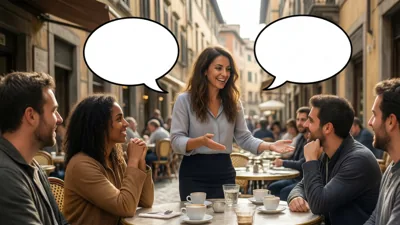
No discussion of Italian language and culture is complete without mentioning gesti – hand gestures. We Italians are famous for talking with our hands, and it’s not just a stereotype; it’s an integral part of our communication.
Why So Many Gestures?
Why do Italians use so many gestures? There are many theories. Some say it developed historically in crowded marketplaces or theaters where you needed to emphasize your point visually. Others point to the historical diversity of languages and dialects on the peninsula – gestures could sometimes bridge communication gaps. Whatever the reason, gestures add emphasis, nuance, and emotion to our spoken language. Sometimes, a gesture can replace words entirely!
I remember as a child watching my relatives have animated conversations where their hands danced almost as much as their voices spoke. It wasn’t distracting; it was part of the message. It conveyed passion, frustration, agreement, or disbelief in a way words alone couldn’t always capture.
Common Gestures and Their Meanings
Learning some basic gesti italiani is almost as important as learning vocabulary for understanding real-life Italian conversation:
- The fingertip kiss: Bunching fingertips together, kissing them, and then spreading them out. Means something is delicious, perfect, chef’s kiss. Used for great food, but also for a job well done or something beautiful.
- Fingers bunched together, pointing upwards (pinecone hand): Shaken slightly at the wrist. This is the classic “What do you want?” / “What are you saying?” / “Ma che vuoi?” gesture. Can express confusion, annoyance, or challenge. Probably the most iconic Italian gesture.
- Chin flick: Flicking the fingers out from under the chin. Means “I don’t care,” “It doesn’t matter,” or “No.” Can be quite dismissive.
- Hand rotating at the wrist, palm down: Means “So-so,” “Not bad,” or “More or less.”
- Rubbing thumb against forefinger: Means “Money.”
These are just a few examples. There are hundreds! Using them correctly (and understanding them) makes interactions feel much more authentically Italian. When I teach, I always include lessons on gestures. It’s fun, practical, and crucial for cultural fluency. Sometimes my students get it wrong, leading to funny misunderstandings, which itself is a great learning moment!
La Dolce Vita and Everyday Language
Beyond the grand themes of history, art, and food, the Italian language reflects everyday cultural values and concepts, often encapsulated in expressions that are hard to translate directly but give insight into the Italian mindset.
Key Concepts in Words:
- La Dolce Vita: “The sweet life.” Popularized by Fellini’s film, it captures a certain Italian attitude towards life – enjoying simple pleasures, beauty, leisure, and social connections. It’s not about laziness, but about prioritizing quality of life.
- Allora: This word is everywhere in spoken Italian! It can mean “so,” “then,” “well,” “at that time.” It’s often used as a filler word, a way to start a sentence, or connect thoughts. Its ubiquity reflects a certain conversational flow, a way of thinking out loud. Learning how and when to use allora makes your Italian sound much more natural.
- Magari: A wonderful word that means “maybe,” “if only,” “I wish.” It expresses hope, desire, or a hypothetical situation. It carries a touch of wistfulness or longing. “Magari potessi andare in Italia quest’estate!” (If only I could go to Italy this summer!).
- Meno Male: “Less bad,” meaning “Thank goodness” or “Fortunately.” It implies a sense of relief that things weren’t worse. “Ho trovato le chiavi, meno male!” (I found the keys, thank goodness!). Reflects perhaps a pragmatic acceptance that things can go wrong, and relief when they don’t.
- Pazienza: “Patience.” But often used almost like an exclamation: “Pazienza!” meaning “Oh well,” “Nothing we can do about it,” “We have to accept it.” It signifies resilience and acceptance in the face of minor (or major) frustrations.
These words and phrases are like little keys to understanding Italian attitudes towards time, fate, social interaction, and life’s ups and downs. They add nuance and emotional depth to the language.
Learning Italian, Living Italian
So, as you can see, learning lingua italiana is so much more than memorizing grammar rules and vocabulary lists. It’s about immersing yourself in the culture that shaped it and continues to live through it.
- When you study Italian history, you understand why Dante is so important and why dialects persist.
- When you appreciate Italian art, you start to feel the musicality and aesthetic sensibility embedded in the language.
- When you cook (and eat!) Italian food, you learn the words for ingredients and rituals, tasting the culture directly.
- When you watch Italians speak, pay attention to their gestures – they are speaking too!
- When you learn common expressions and idioms, you gain insight into the Italian way of thinking and feeling.
For me, teaching Italian is about sharing my love for both the language and the culture. They are inseparable. The beauty of the Italian language is that it carries centuries of history, art, food, passion, and life within its sounds and structures.
My advice to anyone learning Italian is this: Don’t just study the language, live it. Listen to Italian music, watch Italian films (without subtitles first, then maybe with Italian ones!), try cooking Italian recipes using Italian instructions, read Italian news or blogs about topics you enjoy. Engage with the culture in all its forms. Find Italian speakers to talk to – even if you make mistakes, pazienza! The effort to connect culturally will make your language learning journey richer, more meaningful, and ultimately, much more successful.
Learning Italian is opening a door to a world of beauty, history, and flavor. It’s a journey I love guiding people on. And I hope this exploration has shown you just how deep and rewarding that journey can be. In bocca al lupo (Good luck)!