Ciao! As a native Italian speaker and language teacher, I love exploring those quirky parts of the language that textbooks often miss. Idioms are a perfect example. They don’t just add color to conversation; they open a window into how Italians think and see the world. And guess what? We Italians seem to have a particular fondness for using animals in our expressions!
Learning these isn’t just about memorizing phrases. It’s about understanding the imagery and the cultural context. When you start using them correctly, you sound much more natural, more italiano. So, I thought I’d share ten common (and sometimes funny) Italian animal idioms that I hear and use often. We’ll look at what they really mean and how you can actually use them. Forget dry grammar lessons for a moment; let’s dive into the linguistic zoo of Italian!
1. Essere una Mosca Bianca: The Rarity of a White Fly
Let’s start with one you might hear when talking about something or someone truly unusual: essere una mosca bianca.
- Literal Translation: To be a white fly.
- Meaning: It describes someone or something extremely rare, unique, or exceptional. Think about it – have you ever seen a white fly? They’re typically dark. So, a white one would stand out immediately as something highly uncommon.
- How to Use It: You use this when you want to emphasize scarcity or uniqueness. It’s not necessarily positive or negative, just rare.
I often hear this used in conversations about finding specific things or people. For example:
- Example 1: “Trovare un parcheggio gratuito qui in centro è come cercare una mosca bianca.” (Finding free parking here downtown is like looking for a white fly.) - It implies it’s almost impossible.
- Example 2: “Una persona onesta come lui è davvero una mosca bianca nel mondo della politica di oggi.” (An honest person like him is truly a white fly in today’s political world.) - It highlights his exceptional honesty in that context.
- Example 3: “Cercavo un libro specifico di un autore poco conosciuto. Trovarne una copia è stato come trovare una mosca bianca!” (I was looking for a specific book by a little-known author. Finding a copy was like finding a white fly!)
So, next time you encounter something remarkably rare in Italy, you know exactly what to say!
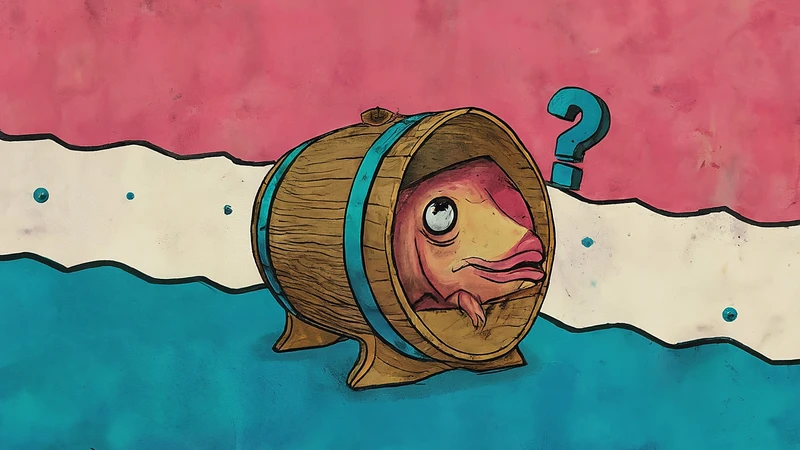
2. Fare il Pesce in Barile: Playing Dumb
This one is interesting, and its meaning isn’t immediately obvious. Fare il pesce in barile.
- Literal Translation: To do the fish in the barrel.
- Meaning: This idiom means to feign ignorance, to pretend not to know, see, or hear something, usually to avoid responsibility, involvement, or answering difficult questions. Imagine a fish stuck in a barrel – it can’t really interact or respond normally to what’s happening outside.
- How to Use It: You use it when someone is clearly avoiding a topic or pretending they’re unaware of a situation they should know about. It often carries a slightly negative connotation of evasiveness.
Important Note: Some sources incorrectly state this means acting foolishly. That’s not the common usage I know as a native speaker. It’s about playing dumb or stonewalling.
Here are some situations where you might use it:
- Example 1: “Ho chiesto a Marco del progetto, ma ha fatto il pesce in barile, dicendo che non ne sapeva niente.” (I asked Marco about the project, but he played dumb, saying he didn’t know anything about it.) - Marco is likely avoiding discussion or responsibility.
- Example 2: “Quando i bambini rompono qualcosa, spesso fanno il pesce in barile e nessuno ammette la colpa.” (When children break something, they often play dumb, and nobody admits fault.) - A classic avoidance tactic!
- Example 3: “Il politico, interrogato sullo scandalo, ha fatto il pesce in barile durante tutta l’intervista.” (The politician, questioned about the scandal, played dumb throughout the entire interview.) - He evaded answering directly.
It’s a useful phrase for describing that frustrating moment when someone is clearly dodging an issue.
3. Essere la Pecora Nera: The Black Sheep
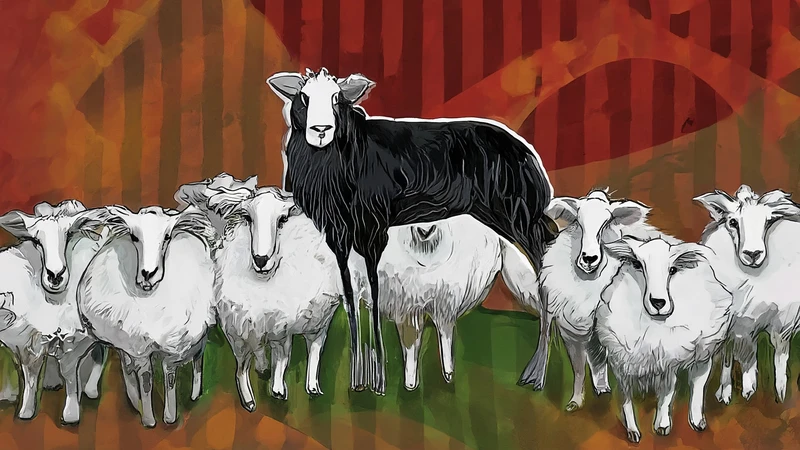
This idiom is probably familiar, as it exists in English too: essere la pecora nera.
- Literal Translation: To be the black sheep.
- Meaning: It refers to someone who is considered different from the rest of their group (usually family), often in a way that’s disapproved of or seen as problematic. Black wool was less valuable, making the black sheep stand out negatively.
- How to Use It: It describes someone who doesn’t conform to the expectations or norms of their family or group. While often negative, it can sometimes be used with a hint of affection or even pride for individuality, depending on the context and tone.
I’ve heard this used countless times, especially when talking about family dynamics:
- Example 1: “Nella mia famiglia sono tutti medici, io ho studiato arte. Sono sempre stata la pecora nera.” (In my family, everyone is a doctor; I studied art. I’ve always been the black sheep.) - Here, it highlights being different.
- Example 2: “È considerato la pecora nera della famiglia perché non ha voluto lavorare nell’azienda di famiglia.” (He’s considered the black sheep of the family because he didn’t want to work in the family business.) - This implies disapproval of his choice.
- Example 3: “Sì, sono un po’ la pecora nera, ma preferisco seguire la mia strada.” (Yes, I’m a bit of the black sheep, but I prefer to follow my own path.) - Used here with a sense of accepting one’s individuality.
It’s a powerful image that resonates across cultures.
4. Avere le Mani di Riccio: Being Stingy (Not Clumsy!)
Here’s another idiom where misinterpretation is common online. Avere le mani di riccio.
- Literal Translation: To have hedgehog hands.
- Meaning: This idiom means to be stingy, tight-fisted, or unwilling to spend money. The image is of a hedgehog, whose spines make it seem difficult to ‘open its hand’ to give something away (like money).
- How to Use It: You use it to describe someone who is very careful with their money, often to the point of being miserly.
Important Note: You might see some sources claiming this means being clumsy. While there’s a different idiom “avere le mani di pastafrolla” (to have shortcrust pastry hands) for clumsiness, “avere le mani di riccio” specifically refers to stinginess. Trust me on this one!
Here’s how you’d hear it used:
- Example 1: “Non chiedere un prestito a lui, ha le mani di riccio!” (Don’t ask him for a loan, he’s really stingy!)
- Example 2: “Quando si tratta di pagare il conto al ristorante, mostra sempre di avere le mani di riccio.” (When it comes to paying the bill at the restaurant, he always shows he’s tight-fisted.)
- Example 3: “È un peccato che sia così generoso di consigli ma abbia le mani di riccio quando si tratta di donazioni.” (It’s a shame he’s so generous with advice but is so stingy when it comes to donations.)
Remember the hedgehog image – prickly and closed off when it comes to spending!
5. Piangere come un Vitello: Crying Like a Calf
This one paints quite a picture: piangere come un vitello.
- Literal Translation: To cry like a calf.
- Meaning: It means to cry inconsolably, loudly, and perhaps excessively, like a young calf separated from its mother might bellow. It emphasizes the volume and intensity of the crying, often implying it’s a bit over the top.
- How to Use It: You use it when someone is weeping dramatically or making a big fuss while crying. It’s often used slightly humorously or to describe children’s tantrums, but can apply to adults too.
Think of situations with lots of tears:
- Example 1: “Il bambino piangeva come un vitello perché non voleva andare a letto.” (The child was crying like a calf because he didn’t want to go to bed.) - Typical tantrum crying.
- Example 2: “Ha visto un film tristissimo e ha pianto come un vitello per mezz’ora.” (She watched a very sad movie and cried like a calf for half an hour.) - Emphasizes the intensity.
- Example 3: “Dopo aver preso una multa, piangeva come un vitello per la rabbia e la frustrazione.” (After getting a ticket, he was crying like a calf out of anger and frustration.) - Over-the-top reaction.
It’s a very visual and auditory idiom!
6. Avere una Fame da Lupi: As Hungry as Wolves
This is one of the most common animal idioms you’ll hear in Italy: avere una fame da lupi.
- Literal Translation: To have a hunger of wolves / like wolves.
- Meaning: It simply means to be extremely hungry, ravenous. The image is powerful – a pack of hungry wolves is associated with intense, driving hunger.
- How to Use It: Use it anytime you want to say you’re starving or someone else is incredibly hungry. It’s very common and natural in everyday conversation.
I use this one all the time!
- Example 1: “Dopo la lunga camminata in montagna, avevamo tutti una fame da lupi!” (After the long hike in the mountains, we all had a hunger like wolves!) - Very common after physical activity.
- Example 2: “Salta la colazione e a pranzo avrai una fame da lupi.” (Skip breakfast, and at lunch, you’ll be ravenous.)
- Example 3: “Cosa c’è per cena? Ho una fame da lupi!” (What’s for dinner? I’m starving!)
It’s direct, expressive, and everyone understands it instantly.
7. Fare le Corna: The Horns of Infidelity (and Luck?)
Ah, fare le corna. This phrase is famous and has a couple of layers.
- Literal Translation: To make the horns.
- Meaning: Primarily, fare le corna a qualcuno means to cheat on someone (romantically). The person being cheated on is said to avere le corna (have horns), a symbol of being cuckolded. It’s a serious accusation. However, the hand gesture associated with it (index and pinky finger extended, middle and ring finger folded down) can also be used to ward off bad luck (fare le corna per scaramanzia), which is completely different! Context is crucial here.
- How to Use It: When talking about infidelity, you use “fare le corna a [partner’s name/pronoun]”. When describing someone who has been cheated on, you say “ha le corna”. Be mindful, it’s a strong statement.
Let’s look at the infidelity meaning:
- Example 1: “Ho saputo che Mario ha fatto le corna a sua moglie.” (I heard that Mario cheated on his wife.) - Direct statement of infidelity.
- Example 2: “Povera Lucia, tutti sanno che ha le corna, tranne lei.” (Poor Lucia, everyone knows she’s being cheated on, except her.) - Describing the person who is the victim of infidelity.
- Example 3: “Si sono lasciati perché lei gli ha fatto le corna.” (They broke up because she cheated on him.)
And the good luck gesture:
- Example (Gesture): Someone mentions a possible misfortune. An Italian might quickly make the horns gesture downwards and say “Facciamo le corna!” (Let’s make the horns!) - meaning “Let’s ward off bad luck” or “Knock on wood”.
Understanding the dual nature of the gesture and the specific phrasing for infidelity is key.
8. Essere una Lumaca: Slow as a Snail
Here’s another straightforward and common one: essere una lumaca.
- Literal Translation: To be a snail.
- Meaning: It means to be extremely slow, either in movement or in completing tasks. Just like a snail, known for its slow pace.
- How to Use It: You can use it to describe a person who walks slowly, works slowly, or even a service (like the mail or internet) that is inefficient and slow. It often carries a tone of impatience or mild frustration.
I find myself thinking this sometimes when stuck in slow situations:
- Example 1: “Dai, muoviti! Sei una lumaca stamattina!” (Come on, move! You’re a snail this morning!) - Said to someone moving very slowly.
- Example 2: “Questo computer è diventato una lumaca, ci mette un’eternità ad aprirsi.” (This computer has become a snail; it takes an eternity to start up.) - Describing slow technology.
- Example 3: “Il servizio clienti è una lumaca, sono in attesa da venti minuti.” (The customer service is a snail; I’ve been on hold for twenty minutes.) - Complaining about slow service.
A simple, effective way to talk about slowness.
9. Saltare come una Pulce: Jumping Like a Flea
Imagine a tiny flea – they jump erratically and energetically. That’s the image behind saltare come una pulce.
- Literal Translation: To jump like a flea.
- Meaning: This idiom describes someone who is very agitated, restless, excited, or unable to stay still. They might be literally jumping around or just fidgeting nervously.
- How to Use It: Use it for kids buzzing with excitement, someone nervously pacing, or a person reacting jumpily to things.
Think of high energy or nervousness:
- Example 1: “I bambini saltavano come pulci aspettando di aprire i regali di Natale.” (The children were jumping like fleas waiting to open Christmas presents.) - Pure excitement.
- Example 2: “Era così nervoso prima dell’esame che saltava come una pulce sulla sedia.” (He was so nervous before the exam that he was jumping like a flea in his chair.) - Restlessness and anxiety.
- Example 3: “Appena ha sentito il telefono squillare, è saltato come una pulce pensando fosse la chiamata importante.” (As soon as he heard the phone ring, he jumped like a flea thinking it was the important call.) - A sudden, jumpy reaction.
It captures that feeling of uncontrollable energy or jitters perfectly.
10. Essere Furbo come una Volpe: Sly as a Fox
Our final idiom involves another animal archetype known across cultures: essere furbo come una volpe.
- Literal Translation: To be cunning/sly/clever as a fox.
- Meaning: It describes someone who is very clever, shrewd, or cunning, often in a way that allows them to get what they want, sometimes by slightly tricky means. The fox is traditionally seen as a symbol of intelligence and slyness.
- How to Use It: You use it to compliment someone’s intelligence or street smarts, but it can also imply that they might be a bit manipulative or self-serving in their cleverness. The connotation depends heavily on the context.
Think of clever problem-solvers or those who know how to work the system:
- Example 1: “È riuscito a ottenere uno sconto incredibile. È furbo come una volpe!” (He managed to get an incredible discount. He’s sly as a fox!) - Positive admiration for his negotiation skills.
- Example 2: “Non provare a ingannarlo, è furbo come una volpe e capirà subito.” (Don’t try to deceive him; he’s cunning as a fox and will understand immediately.) - Highlights his sharp intelligence.
- Example 3: “Ha trovato un modo per non pagare la multa. Certo, non è molto onesto, ma è furbo come una volpe.” (He found a way not to pay the fine. Sure, it’s not very honest, but he’s sly as a fox.) - Acknowledges cleverness but hints at trickery.
It’s a common way to describe someone sharp and resourceful.
Why Bother Learning These Idioms?
So, we’ve looked at ten Italian idioms packed with animal imagery. As a teacher, I always encourage my students to learn idioms like these. Why?
- Sound More Natural: Using idioms correctly is a hallmark of fluency. It shows you understand the language beyond literal translations.
- Understand Italians Better: You’ll start catching these expressions in movies, songs, and conversations, deepening your comprehension.
- Cultural Insight: They reveal cultural perspectives – the significance of horns, the image of a stingy hedgehog, the ravenous wolf. Language and culture are intertwined.
- It’s Fun!: Let’s be honest, saying someone is “crying like a calf” or “hungry like wolves” is more engaging and memorable than just saying “crying a lot” or “very hungry.”
Don’t feel pressured to use them all immediately. Start by learning to recognize them. Pick one or two that you like or find useful, like avere una fame da lupi (because who isn’t hungry often?) or essere una lumaca (perfect for complaining about slow traffic!), and try to slip them into your practice conversations.
Learning Italian is a journey, and exploring its idiomatic expressions is one of the most rewarding parts. Keep listening, keep practicing, and don’t be afraid to embrace the Italian linguistic zoo! In bocca al lupo! (Good luck! - literally “In the wolf’s mouth”, another animal idiom for you!)