Ciao a tutti! As an Italian teacher, born and raised in Italy, one question pops up all the time: “So, Italian is basically just modern Latin, right?” I get why people ask this. It seems logical, doesn’t it? When you think about Italy, Rome, the ancient ruins… the connection feels obvious. Italian and Latin are absolutely family, no doubt about it. But saying they’re the same thing? Well, that’s like saying you’re identical to your great-great-grandma just because you both have the same nose. There’s a resemblance, for sure, but so much has changed over the years!
Note: This article was originally published on December 3, 2023, and was last updated on July 20, 2026, to include additional etymological insights.
It’s easy to fall into this way of thinking. Imagine strolling through Rome, seeing ancient inscriptions carved into stone, and then hearing the lively chatter of Italians in a piazza nearby. You might catch some echoes. But the idea that the Italian I speak every day is just an updated version of the language Cicero wrote in? That’s not quite the whole story. The journey from ancient Roman speeches to the Buongiorno! you hear today was long, winding, and full of fascinating twists and turns.
So, let’s dig into this together. No need for dusty history books, maybe just grab a cappuccino. I want to show you the real relationship between Italian and Latin. We’ll look beyond the surface similarities and get into what makes them truly similar yet distinct. We’ll see how Italian grew from Latin but blossomed into its own unique, beautiful language. Ready? Andiamo! Let’s explore this.
Where It All Began: Latin and Its Huge Shadow
To really get the connection between Italian and Latin, we have to rewind quite a bit. Let’s talk about Latin. This wasn’t just any language; it was the powerhouse language of the vast Roman Empire. It started out relatively small, spoken by folks in Latium (the region around Rome) and belonged to the Italic branch of the big Indo-European language family. But as Rome grew, so did Latin’s reach.
For centuries – through the Roman Kingdom, the Republic, and the mighty Empire – Latin was the official language for everything important: laws, government documents, literature, philosophy, and the military. Think of the famous figures like Julius Caesar, Cicero, Virgil – they all wrote and spoke in what we call Classical Latin. This is the formal, polished version, the one often studied in schools, known for its precise grammar and elegant style.
But here’s a crucial point I always emphasize to my students: Classical Latin was primarily the language of writing, of education, of the upper classes. What about the everyday people? The soldiers, the merchants, the farmers, the people chatting in the streets and markets across the sprawling empire? They spoke a different kind of Latin, something linguists call Vulgar Latin. Now, ‘vulgar’ here doesn’t mean rude or coarse; it comes from the Latin sermo vulgaris, meaning “common speech.”
Vulgar Latin wasn’t a single, uniform language. It varied quite a bit depending on where you were geographically and your social standing. And like all living, spoken languages, it was constantly changing, evolving. It was generally simpler in its grammar than Classical Latin and readily absorbed local words and pronunciation habits from the diverse peoples within the empire.
Now, fast forward to around the 5th century AD. The Western Roman Empire began to crumble. Central authority weakened, communication routes broke down, communities became more isolated, and the unifying cultural influence of Rome faded. What happened to Vulgar Latin? Left on their own, the regional variations started diverging more and more rapidly. People in what is now France started speaking differently from people in Spain, who spoke differently from people on the Italian peninsula. Over hundreds of years, these local dialects evolved into separate, distinct languages. These are the Romance languages we know today: Italian, French, Spanish, Portuguese, Romanian, Catalan, and others.
So, here’s the key takeaway: Italian didn’t directly evolve from the high-brow Classical Latin of literature and officialdom. It grew out of the Vulgar Latin spoken daily by the people living on the Italian peninsula. It was the living, breathing, ever-changing language of the common folk that formed the true foundation of modern Italian. Understanding this difference is the first big step! 
How Sounds Changed: From Roman Ears to Italian Voices
Languages aren’t static things preserved in amber; they’re alive, constantly shifting and changing with the people who speak them. One of the most noticeable ways Italian drifted away from its Latin ancestor is in its pronunciation – the actual sounds of the words. How Latin sounded is quite different from how Italian sounds today.
Just think about how accents vary dramatically within English-speaking countries today – compare someone from Texas to someone from Scotland! Now imagine similar changes happening over centuries, influenced by local speaking habits, contact with other languages (like Germanic languages from invaders), and the natural tendency for sounds to simplify or shift over time.
Even Vulgar Latin already sounded different from Classical Latin. For example, Classical Latin had distinct long and short vowel sounds that could completely change a word’s meaning. This distinction largely disappeared in Vulgar Latin. Instead, the quality of the vowel – how open or closed your mouth is when you say it – became more important. This shift carried directly into Italian, influencing its vowel system.
Let’s look at a few concrete examples of these sound changes from Latin to Italian. It really helps to see it in action:
- The “C” Sound: In Classical Latin, the letter ‘C’ was always pronounced like a hard ‘K’, no matter what vowel came after it. So, the famous orator CICERO was pronounced ‘Kikero’. In Italian, this changed. When ‘C’ comes before the vowels ’e’ or ‘i’, it softened into the ‘ch’ sound we hear in the English word “church.”
- Latin: CENTUM (pronounced ‘ken-tum’) -> Italian: cento (‘chen-to’) - meaning one hundred
- Latin: CAELUM (‘kai-lum’) -> Italian: cielo (‘cheh-lo’) - meaning sky
- Latin: CASA (‘ka-sa’) -> Italian: casa (‘ka-sa’) - meaning house (Here, ‘c’ before ‘a’ kept its hard ‘k’ sound, just like in Latin)
- The “G” Sound: A similar thing happened with ‘G’. In Latin, it was always a hard ‘g’ (like in “go”). But in Italian, when ‘G’ comes before ’e’ or ‘i’, it softened into a ‘j’ sound (like the ‘g’ in “gelato” or “gentle”).
- Latin: GELU (‘ge-loo’, hard ‘g’) -> Italian: gelo (‘jeh-lo’) - meaning frost
- Latin: GENTEM (‘gen-tem’, hard ‘g’) -> Italian: gente (‘jen-teh’) - meaning people
- Tricky Consonant Clusters: Latin had some consonant combinations that later speakers found a bit difficult to pronounce smoothly. Over time, these clusters often got simplified, or sometimes a vowel was inserted.
- The Latin ‘CT’ cluster often became ‘TT’ in Italian: NOCTEM (’nok-tem’) -> Italian: notte (’not-teh’) - meaning night. The ‘k’ sound essentially assimilated.
- Clusters like ‘CL’, ‘PL’, ‘FL’ at the beginning of words sometimes transformed into ‘CHI’ (ky-), ‘PI’ (py-), ‘FI’ (fy-). This is called palatalization.
- Latin: CLAMARE (‘kla-ma-re’) -> Italian: chiamare (‘kya-ma-reh’) - meaning to call
- Latin: PLUS (‘ploos’) -> Italian: più (‘pyoo’) - meaning more
- Latin: FLOREM (‘flo-rem’) -> Italian: fiore (‘fyoh-reh’) - meaning flower
- Losing the Ends: Many consonants that appeared at the very end of Latin words, particularly ’m’, ’t’, and ’s’, simply dropped off over time as Italian took shape. This might seem like a small change, but it had massive consequences for grammar, as we’ll see in a moment.
- Latin: ROSAM (This was the form of ‘rose’ used when it was the direct object of a verb) -> Italian: rosa (The final ’m’ disappeared)
- Latin: AMAT (meaning ‘he/she loves’) -> Italian: ama (The final ’t’ dropped off)
These are just a handful of examples! There were many other complex sound shifts, like palatalization (where sounds shift towards the palate, like ’ni’ becoming the ‘gn’ sound in gnocchi), diphthongization (single vowels turning into double vowels), and more. All these accumulated changes gradually reshaped the acoustic landscape of the language spoken in Italy, leading to the melodic sounds of modern Italian, which are quite distinct from the reconstructed sounds of its Latin ancestor. 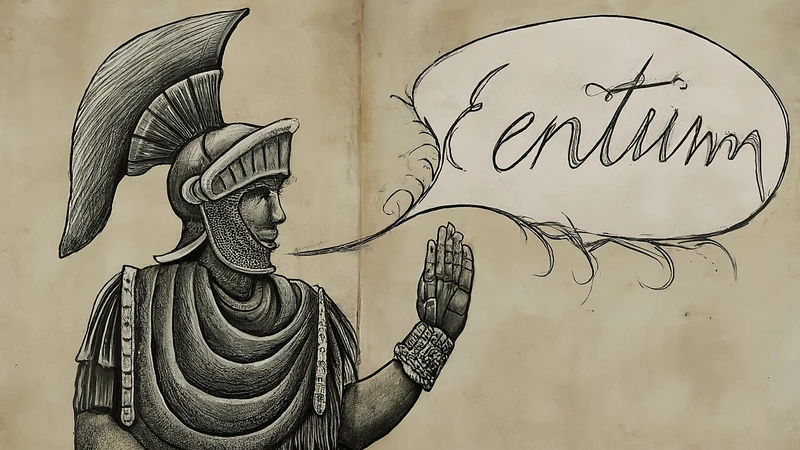
Grammar Makeover: Simplifying Things (Well, Mostly!)
Okay, now we get to one of the biggest areas where Latin and Italian went their separate ways: grammar. Latin grammar is famous – or perhaps infamous, depending on your experience! – for its complexity. It’s like an intricate clockwork mechanism with many tiny, interconnected parts. Italian grammar, while certainly having its own rules and challenges (as my students can surely attest!), streamlined many aspects of its Latin heritage.
The absolute star of Latin grammar, the feature everyone learns about, is its case system.
The Famous (and Feared) Latin Cases
What does this mean? In Latin, the function of a noun (or pronoun or adjective) in a sentence – whether it was the subject, the object, showing possession, etc. – was indicated by changing the ending of the word. These different endings are called cases. Latin typically had six main cases:
- Nominative: Used for the subject of the verb (the one doing the action). Example:
ROSAest pulchra- The rose is beautiful. - Genitive: Used to show possession (like ’s or ‘of’). Example:
colorROSAE- the color of the rose. - Dative: Used for the indirect object (to whom or for whom the action is done). Example:
do aquamROSAE- I give water to the rose. - Accusative: Used for the direct object (the one receiving the action). Example:
videoROSAM- I see the rose. - Ablative: Used with various prepositions to indicate things like means (‘by’), manner (‘with’), place from which (‘from’), etc. Example:
sum cumROSA- I am with the rose. - Vocative: Used for direct address (when talking to someone or something). Example:
OROSA! - O rose!
Because the word’s ending clearly signaled its role, Latin could be incredibly flexible with its word order. You could often rearrange words in a sentence for emphasis or style without losing the core meaning. For instance, Rosa videt puellam (The rose sees the girl) meant essentially the same as Puellam videt rosa. The endings -a (nominative) and -am (accusative) kept things clear.
Italian’s New Strategy: Hello Prepositions and Word Order!
So, what happened when Vulgar Latin evolved into Italian? Essentially, the case system collapsed and disappeared! Remember those sound changes we talked about, especially the loss of final consonants and changes in vowel sounds? These changes eroded the distinct case endings, making them sound similar or identical. Eventually, they were no longer reliable markers of grammatical function.
So, how does Italian communicate the role of a noun in a sentence without case endings? It primarily relies on two main tools:
- Prepositions: These are small but mighty words like di (of), a (to/at), da (from/by), in (in), con (with), su (on), per (for), tra/fra (between/among). These prepositions took over the jobs previously done by the Latin case endings.
- Word Order: While Latin could play around with word order, Italian became much more reliant on a relatively fixed Subject-Verb-Object (SVO) structure to convey meaning clearly. You can vary it sometimes for emphasis (Italian is more flexible than English here), but you can’t just shuffle words randomly like in Latin without causing confusion or sounding quite strange.
Let’s revisit our rose example to see the difference starkly:
- Latin (Subject):
ROSAest pulchra. - Italian (Subject):
La rosaè bella.(Italian uses the definite article ‘La’ before the noun) - Latin (Possession - Genitive):
colorROSAE - Italian (Possession):
il coloredella rosa(Italian uses the preposition ‘di’ combined with the article ’la’ -> ‘della’ = ‘of the’) - Latin (Indirect Object - Dative):
do aquamROSAE - Italian (Indirect Object):
do l'acquaalla rosa(Italian uses the preposition ‘a’ combined with the article ’la’ -> ‘alla’ = ’to the’) - Latin (Direct Object - Accusative):
videoROSAM - Italian (Direct Object):
vedola rosa(Italian uses the article ’la’; the noun form rosa doesn’t change)
See the pattern? Instead of changing the ending of rosa, Italian uses articles (la) and prepositions (di, a) in front of the noun to clarify its function in the sentence. This represents a fundamental restructuring of the language’s grammatical engine. It’s a shift from an inflectional language (relying on endings) to a more analytic language (relying on helper words and word order). 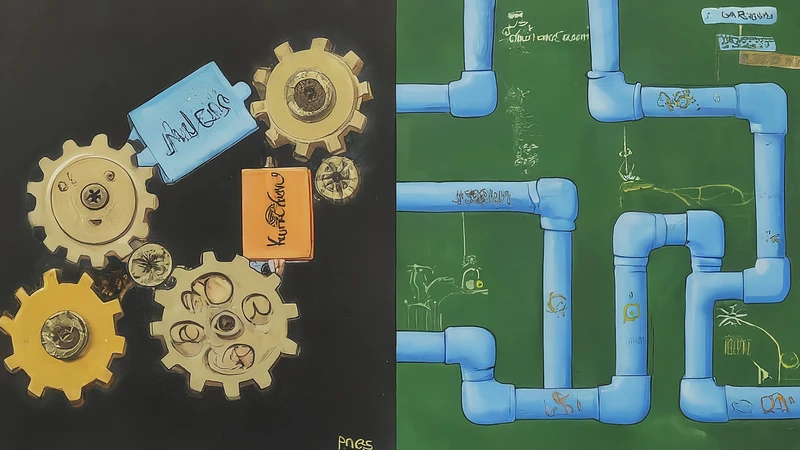
What Happened to Verbs?
Verb conjugation – changing verb endings to show who is performing the action (person), when it happens (tense), and the speaker’s attitude towards it (mood) – remains incredibly important in Italian, just as it was in Latin. Both languages have a rich system of verb forms. However, Italian introduced simplifications and changes here as well:
- Fewer Tenses/Moods: Some Latin tenses and moods didn’t survive into standard Italian or are used much less frequently (like the future perfect indicative or certain forms of the subjunctive).
- Rise of Compound Tenses: Italian developed and heavily relies on compound tenses, especially for past actions (like the passato prossimo: e.g., ho mangiato, meaning ‘I ate’ or ‘I have eaten’). These use auxiliary (helping) verbs – mainly avere (to have) and essere (to be) – combined with the past participle of the main verb. While Latin had some compound forms, it relied more heavily on simple, single-word tenses for past actions.
- Passive Voice Construction: Latin formed the passive voice using specific passive endings added to the verb stem. Italian typically forms the passive using the verb essere plus the past participle (e.g., la mela è mangiata - the apple is eaten), or by using the “si passivante” construction (e.g., si parla italiano - Italian is spoken).
So, while the core concept of verb conjugation is inherited from Latin, the specific inventory of tenses and moods, their forms, and how they are used have undergone significant evolution in Italian.
In essence, the grammatical journey from Latin to Italian involved moving away from relying heavily on complex word endings (inflections), especially for nouns, and towards a system that uses helper words (prepositions, articles) and depends more significantly on word order to make meaning clear.
Vocabulary: Shared Roots, Different Branches, and Some New Flowers
When you compare Italian and Latin words, the family connection often feels incredibly strong. A massive portion of the Italian vocabulary comes directly from Latin roots. Sometimes, the words have barely changed at all:
| Latin | Italian | English Meaning |
|---|---|---|
| PATER | padre | father |
| MATER | madre | mother |
| FRATER | fratello | brother |
| SOROR | sorella | sister |
| FILIUS | figlio | son |
| FILIA | figlia | daughter |
| AMICUS | amico | friend (m.) |
| AMICA | amica | friend (f.) |
| AQUA | acqua | water |
| VINUM | vino | wine |
| PANIS | pane | bread |
| SOL | sole | sun |
| LUNA | luna | moon |
| MANUS | mano | hand |
| PES / PEDEM | piede | foot |
| BONUS | buono | good |
| MAGNUS | magno (rare, poetic), usually grande | big, great |
| FLOS / FLOREM | fiore | flower |
| CANIS | cane | dog |
| PORTA | porta | door |
Looking at lists like this, it’s easy to think, “See? They are almost the same!” And yes, this shared core vocabulary is undeniable and very important. If you happen to have studied Latin, it gives you a fantastic head start in recognizing many Italian words and their meanings.
However, vocabulary is also a fascinating area where we see how the languages diverged and how Italian developed its own unique character:
1. Words Changing Hats: Semantic Shifts
Sometimes, a word survived the journey from Latin to Italian, but its meaning took a detour along the way. This is called semantic shift.
- Latin
TESTA: Originally, this word meant something like a ‘clay pot’ or sometimes ‘skull’. In Italian,testabecame the standard, everyday word for ‘head’. (The formal Classical Latin word for head, CAPUT, gave Italian capo, which can mean ‘head’ but often means ‘chief’, ‘boss’, or ’leader’). It’s funny to think we basically call our head a ‘pot’! - Latin
NECARE: This meant ’to kill’ by any means. In Italian, the descendantannegarespecifically means ’to drown’. The general word for ’to kill’ became uccidere (which comes from a different Latin verb, OCCIDERE). - Latin
VILLANUS: This simply referred to a ‘farm worker’, someone attached to a villa (a country estate). Over time, perhaps due to social prejudices, the Italian descendantvillanocame to mean ‘rude’, ‘uncouth’, or ‘ill-mannered person’, and eventually even ‘villain’. - Latin
CASA: In Classical Latin, this meant a simple ‘hut’, ‘cottage’, or ‘shack’. The grander word was DOMUS. But in Vulgar Latin, CASA became more common, and in Italian,casais the normal word for ‘house’ or ‘home’. (DOMUS gave us duomo, which means a cathedral – a very specific kind of ‘house’!). - Latin
CABALLUS: This was the Vulgar Latin term for a ‘workhorse’ or ’nag’, less elegant than the Classical EQUUS. Guess which one survived into Italian?Cavallo(horse) comes from CABALLUS. EQUUS mostly disappeared from everyday speech.
These shifts show how the meanings of words can drift based on how people actually use them over centuries.
2. Welcoming Guests: Loanwords from Other Languages
Italian didn’t develop in a vacuum. Throughout its history, the Italian peninsula was a crossroads of cultures, trade, and sometimes conflict. This meant Italian borrowed words – loanwords – from many other languages, enriching its vocabulary far beyond its Latin roots.
- Germanic Languages (Goths, Lombards, Franks): Especially during the early Middle Ages, Germanic tribes left their mark on the language, contributing words related to warfare, administration, and daily life. Examples include: guerra (war, from Proto-Germanic werra), guardare (to watch/guard), sala (hall), sponda (river bank), sapone (soap), banco (bench), ciuffo (tuft of hair).
- Arabic: Through trade and cultural exchange, particularly via Sicily and southern Italy during the Middle Ages, Arabic contributed many words, especially in fields like science, mathematics, navigation, food, and administration. Think of: algebra, algoritmo (algorithm), cifra (digit/cipher), zucchero (sugar), arancia (orange), limone (lemon), melanzana (eggplant/aubergine), carciofo (artichoke), magazzino (warehouse), dogana (customs).
- French: French influence has been significant at various points, especially from the Norman period and later during the Renaissance and beyond. It contributed words related to feudalism, chivalry, fashion, cuisine, and diplomacy. Examples: mangiare (to eat, from Old French mangier which itself came from Latin manducare), formaggio (cheese, from fromage), giardino (garden), viaggio (journey), moda (fashion), regalo (gift), burro (butter).
- Spanish: Spanish influence was notable particularly during periods when Spain controlled parts of Italy (like the south and Milan). Examples: flotta (fleet), disagio (discomfort, unease), baccalà (dried codfish), complimento (compliment).
- English: In more recent times, and especially today, English is a major source of loanwords, particularly in technology, business, sports, and pop culture. Italians regularly use words like: il computer, il software, il weekend, lo sport, il marketing, il film, il meeting, ok.
These layers of borrowed words make modern Italian vocabulary a rich tapestry woven from many threads, not just Latin ones.
3. Watch Out! False Friends (Looks Can Be Deceiving)
This is something I always warn my students about! Because Italian and Latin are related, there are words that look very similar or even identical but have different meanings. These are called false friends (falsi amici in Italian), and they can trip you up.
- Latin
PARENS(singular) usually meant ‘parent’. But the plural formPARENTESoften referred more broadly to ‘relatives’ or ‘ancestors’. In Italian,parenti(plural) almost always means ‘relatives’ in general (aunts, uncles, cousins, etc.). The specific word for ‘parents’ (mother and father) isgenitori. This is a classic trap! - Latin
SENTIREhad a broad meaning: ’to feel’ (with any sense), ’to perceive’, ’to notice’, ’to think’. In Italian,sentirecan mean ’to feel’ (touch, emotions), but its most common, everyday meaning is ’to hear’. It can also mean ’to smell’. So, if an Italian says Sento un rumore, they mean “I hear a noise,” not “I feel a noise.” - Latin
INTENDEREmeant things like ’to stretch out’, ’to aim’, ’to direct one’s attention’, ’to intend’. In Italian,intendereprimarily means ’to understand’ (similar to capire). It can also mean ’to mean’ or ’to intend’, but ‘understand’ is very common. Non intendo usually means “I don’t understand.”
So, while the strong vocabulary link is helpful, you can’t just swap Latin words for Italian ones and assume the meaning is the same. Italian has charted its own course over the past 1500+ years, creating a rich and distinct vocabulary.
So, Can I, as an Italian Speaker, Just Read Latin?
This is a fun question I get asked sometimes. Given all the similarities we’ve talked about, can someone like me, a native Italian speaker, just pick up a text by Caesar or Catullus and understand it? Or maybe listen to a reconstruction of spoken Latin and follow along?
The honest answer is: No, not really. Not without specific study.
An Italian looking at a simple Latin sentence might recognize many individual words, especially if they are related to common concepts. The vocabulary overlap is definitely there. But understanding the meaning of the whole sentence, how the words fit together grammatically, and the nuances? That’s a completely different challenge. Here’s why:
- The Grammar Chasm: The case system is the biggest hurdle. Without knowing what those different Latin endings signify, it’s incredibly difficult to figure out who is doing what to whom. Italian relies on prepositions and word order for this, so the Latin system feels alien. Verb endings, tenses, and moods are also different enough to cause significant confusion. You might recognize the verb root, but the specific form could be meaningless without study.
- Vocabulary Pitfalls: Yes, many words are similar, but as we saw, there are enough differences – semantic shifts (changed meanings) and false friends – to lead to misunderstandings or complete incomprehension. Basic words might be recognizable, but more complex, abstract, or technical vocabulary often differs significantly.
- Sound Barrier: If we imagine listening to spoken Latin (based on scholarly reconstructions of Classical or Vulgar Latin pronunciation), it would likely sound very foreign to an Italian ear. The numerous sound changes over the centuries mean the rhythm, intonation (the ‘music’ of the language), and individual vowel and consonant sounds would be quite different, probably making it largely unintelligible.
A good analogy might be an average modern English speaker trying to read Chaucer’s Canterbury Tales in the original Middle English. You might pick out some words, but understanding the whole thing requires specific learning. Trying to read Beowulf in Old English would be even harder – it feels like a completely different language, even though it’s an ancestor of modern English.
However, there’s a flip side! Knowing Italian (either as a native or an advanced learner) provides a massive advantage if you do decide to study Latin.
- You’ll recognize thousands of word roots instantly.
- Grammatical concepts like noun gender, adjective agreement, and complex verb conjugation won’t feel completely foreign, as Italian has them too (though implemented differently).
- Some basic sentence structures and sounds might feel familiar.
But it’s still a separate subject that requires dedicated effort and learning. You don’t get Latin “for free” just by knowing Italian.
Why Does Any of This Matter for You Learning Italian?
Okay, we’ve journeyed through history, sounds, grammar, and words. That’s all interesting, maybe, but why should you, as someone focused on learning modern Italian right now, care about its relationship with ancient Latin? I genuinely believe understanding this connection is incredibly helpful for learners, for several practical reasons:
- Understanding the ‘Why’: Sometimes Italian grammar rules can feel a bit arbitrary. Why does Italian need so many prepositions (di, a, da, in…)? Why do adjectives have to agree with nouns in gender and number? Where did all those different verb endings come from? Seeing the historical link to Latin, understanding the collapse of the case system and the evolution of sounds, provides context. It helps explain the logic behind the rules, making them feel less random and easier to internalize. It helps things ‘click’.
- Boosting Your Vocabulary: This is a big one. Once you start recognizing common Latin roots, you can unlock the meaning of many Italian words. If you know Latin PORTA meant ‘door’ or ‘gate’, then Italian words like portare (to carry, maybe originally ‘carry through a gate’?), portone (main door), portiere (doorman/goalkeeper), importare (to import, ‘bring in’), esportare (to export, ‘carry out’), opportuno (opportune, maybe ’near the port/gate’?) start to form a connected family in your mind. It makes learning new words faster and more intuitive.
- Appreciating the Language’s Depth: Knowing that Italian isn’t just a collection of modern words and rules, but a language with a direct lineage stretching back over two millennia to the language of Rome, adds richness to your learning experience. You’re learning a language shaped by centuries of history, culture, migration, and the everyday lives of millions of people. It connects you to something much bigger.
- Connecting to Sister Languages: Understanding the Latin connection also illuminates the similarities between Italian and the other Romance languages (Spanish, French, Portuguese, Romanian, etc.). They all evolved from Vulgar Latin in different regions. Recognizing these shared roots can make it easier to learn another Romance language later on, as you’ll spot many parallels in vocabulary and grammar.
Ultimately, it transforms your learning from simple memorization into a deeper understanding and appreciation of this incredibly expressive and beautiful language.
Conclusion: A Proud Daughter, Not a Modern Clone
So, let’s circle back to that initial question: Is Italian just modern Latin? Having explored the journey from ancient Rome to contemporary Italy, the answer is a clear and definitive no.
Italian is a direct descendant of Latin, specifically of the Vulgar Latin spoken colloquially on the Italian peninsula. It proudly carries the genetic markers of its ancestor. But – and this is the important part – it has spent roughly 1,500 years living its own life, changing, adapting, and evolving independently.
Think of Latin as the nonna (grandmother) and Italian as one of her vibrant, modern granddaughters. You can absolutely see the family resemblance – the shared DNA is evident in countless words and the fundamental concept of things like verb conjugation and grammatical gender. But the granddaughter has developed her own unique style (her pronunciation is different), her own way of organizing her thoughts and expressing herself (her grammar, relying on prepositions and word order instead of cases), and her vocabulary is full of words reflecting her own experiences and friendships (loanwords and semantic shifts).
Italian forged its own distinct sound system, melody, and rhythm. It fundamentally restructured its grammar, replacing the complex Latin case system with a more analytic approach. It simplified some aspects of verb usage while developing new ones. It eagerly borrowed words from neighbours and invaders, reflecting Italy’s rich and complex history. Italian stands proudly on its own two feet as a distinct, complete, and wonderfully expressive language.
Understanding this relationship helps us appreciate both the monumental legacy of Latin and the unique beauty and vitality of Italian. As you continue your journey learning Italian, I hope you’ll sometimes hear those faint echoes of ancient Rome in a word or a phrase. But more importantly, I hope you’ll fall in love with Italian for the rich, nuanced, and very much alive language it is today.
It’s a language with incredibly deep roots, but it’s constantly growing and changing even now. And that dynamic blend of history and modernity, I think, is what makes learning it such a rewarding adventure.
In bocca al lupo (Good luck!) with your Italian studies! Keep exploring!
Deepen Your Italian Understanding Through Conversation
Understanding the history and structure of Italian enriches your learning, but there’s nothing quite like discussing these fascinating aspects with a native speaker. You’ll learn how Italians naturally express themselves, pick up cultural nuances, and develop the conversational confidence that only comes from real dialogue.
Want to explore Italian language and culture in depth? Join me for personalized conversation sessions where we can discuss grammar, history, current events, and everything in between. Let’s bring your Italian to life!